

Machine learning applications are transforming how we interact with technology in everyday life. From personalized recommendations and fraud detection to healthcare and automation, machine learning is widely used across industries to improve efficiency and decision-making. In this guide, we will explore the most important real-life applications of machine learning and how they impact our daily lives.
In this article, we’ll explore real-life applications of Machine Learning, explained in a simple and practical way.
Table of Contents
Why Machine Learning Matters in Everyday Life
Machine learning applications allow systems to:
- Learn from data
- Improve automatically over time
- Make predictions and decisions without constant human input
Because of this, it has become a core technology behind many modern services.
1. Recommendation Systems
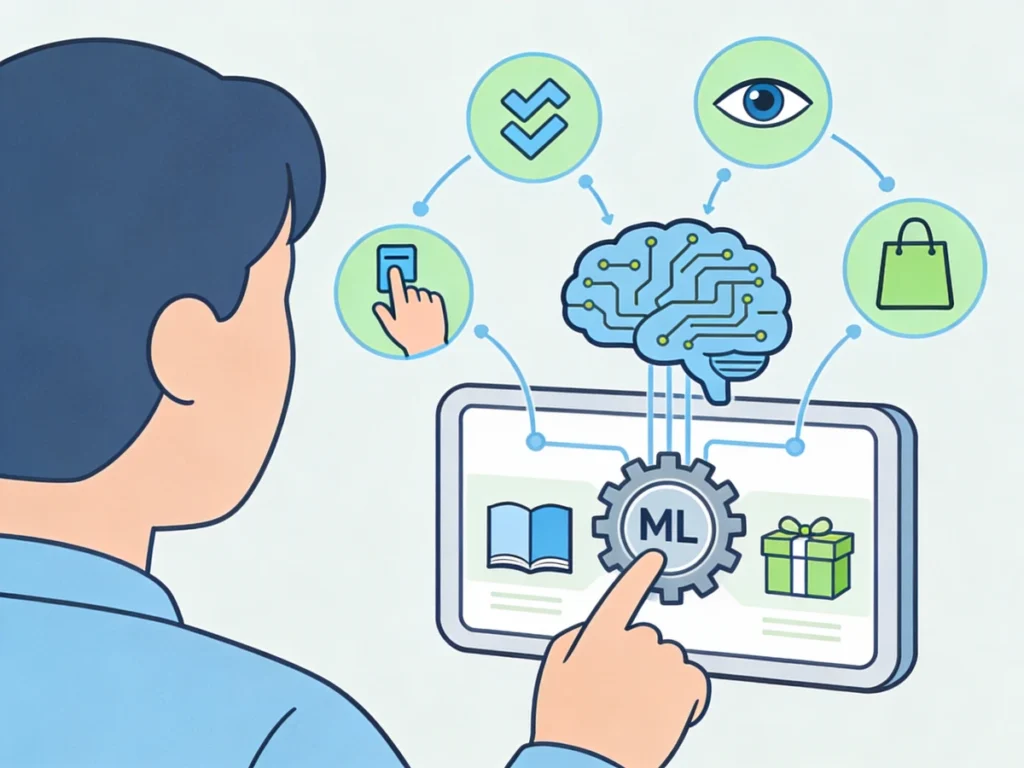
One of the most common uses of Machine Learning is recommendation systems.
How it works
- Analyzes user behavior (clicks, searches, watch history)
- Identifies patterns
- Suggests relevant content or products
Examples
- Movie and TV recommendations
- Online shopping suggestions
- Music playlists
These systems improve as they collect more data.
2. Email Spam Detection
Email providers rely heavily on Machine Learning Applications to keep inboxes clean.
How it works
- Models are trained on spam and non-spam emails
- They learn common patterns used by spammers
- New emails are classified automatically
This process happens in real time and continuously improves.
3. Image and Face Recognition
Machine Learning powers image recognition technologies used in many devices and platforms.
Examples
- Phone face unlock
- Photo organization apps
- Security and surveillance systems
The model learns visual patterns from thousands of images to identify objects or faces accurately.
4. Voice Assistants and Speech Recognition
Voice assistants use Machine Learning to understand and respond to human speech.
Examples
- Voice typing
- Smart speakers
- Virtual assistants on phones
These systems convert speech into text and learn accents, pronunciation, and language patterns over time.
5. Fraud Detection in Banking
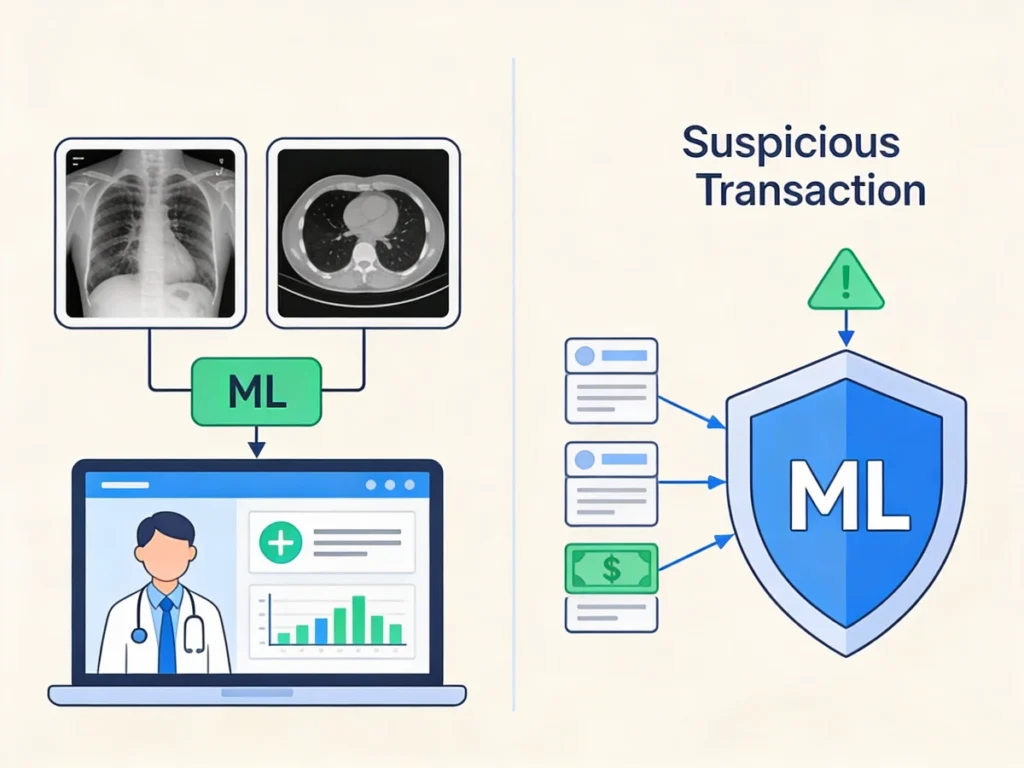
Banks and financial institutions use Machine Learning Applications to detect suspicious activities.
How it works
- Analyzes transaction patterns
- Detects unusual behavior
- Flags potential fraud instantly
This helps prevent financial losses and protects users.
6. Healthcare and Medical Diagnosis
Machine Learning is transforming healthcare by assisting doctors and researchers.
Applications
- Disease prediction
- Medical image analysis
- Personalized treatment plans
While machines don’t replace doctors, they support faster and more accurate decision-making.
7. Search Engines and Online Ads
Search engines use Machine Learning to:
- Rank search results
- Understand user intent
- Show relevant advertisements
This makes search results more useful and personalized.
8. Transportation and Navigation
Machine Learning improves transportation systems by:
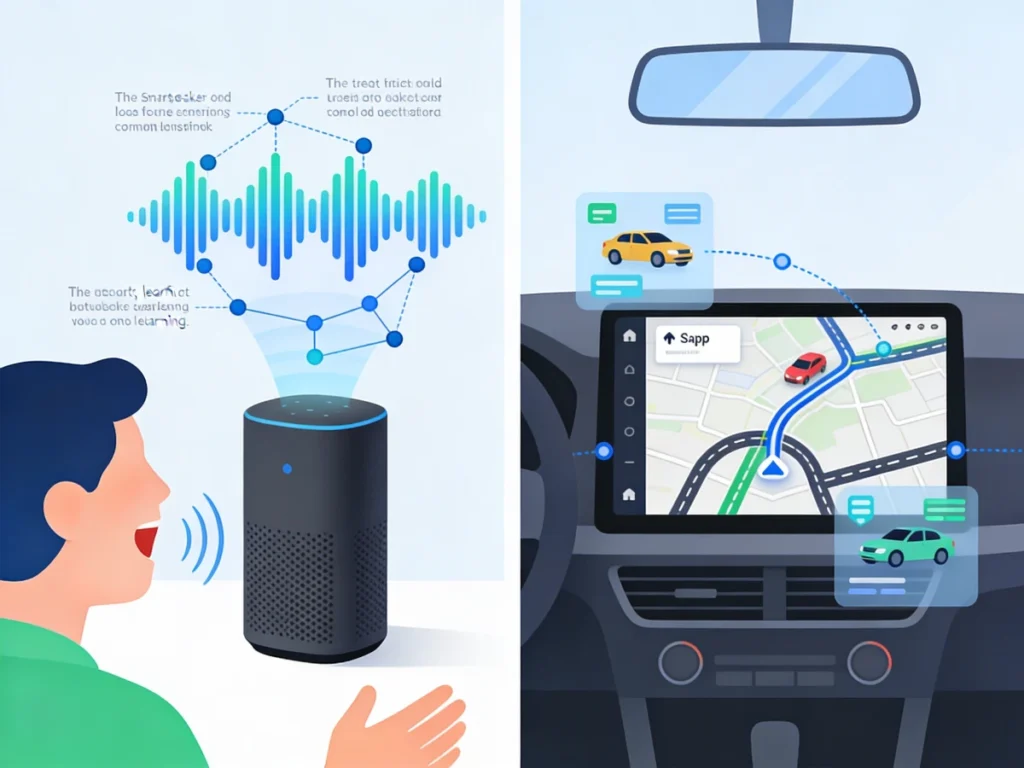
- Predicting traffic conditions
- Optimizing routes
- Supporting self-driving technologies
Navigation apps use ML to suggest faster routes based on real-time data.
How These Applications Improve Over Time
Machine Learning systems get better because:
- They process more data
- Models are retrained regularly
- Errors are analyzed and reduced
This continuous learning cycle is what makes ML powerful.
How This Fits into Artificial Intelligence
Machine Learning is a major part of Artificial Intelligence, enabling systems to adapt, learn, and improve without being explicitly programmed for every situation.
Final Thoughts
Machine Learning is already deeply integrated into everyday life, often without us realizing it. From entertainment and communication to healthcare and finance, it continues to shape how modern technology works.
As data grows, Machine Learning applications will become even more accurate, helpful, and widespread.