
🛰️ Introduction
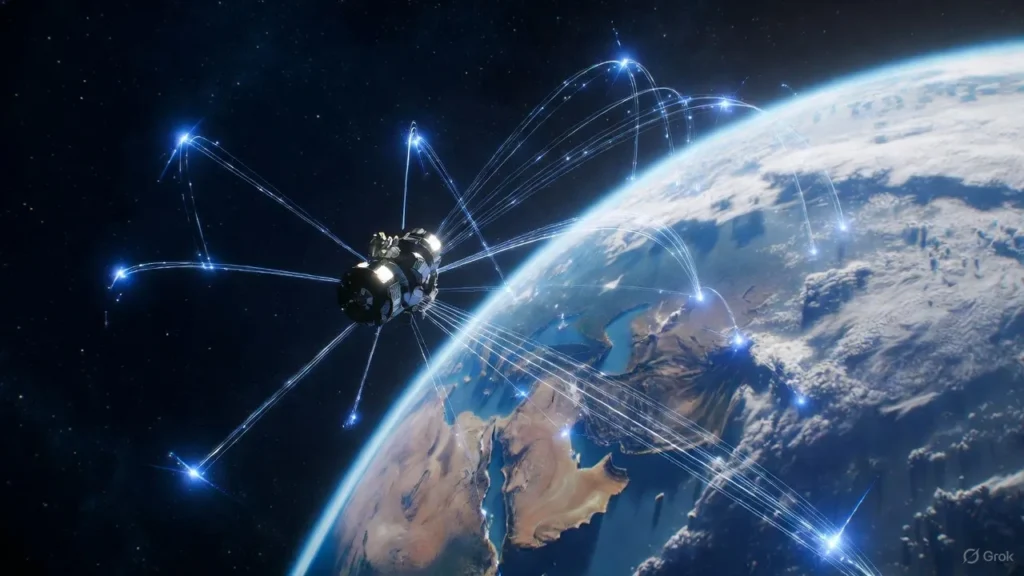
How satellites work is an important concept that helps us understand modern communication, navigation, and global technology systems. Satellites play a crucial role in modern technology, enabling global communication, navigation, weather forecasting, and scientific research. Although often unnoticed in daily life, satellites orbiting Earth help power many services people rely on—from GPS navigation and television broadcasting to internet connectivity and disaster monitoring.
Table of Contents
In this beginner-friendly guide, we’ll explore what satellites are, how they work, the different types of satellites, and their real-world applications.
🌍 What Is a Satellite?
A satellite is an object that orbits around a larger celestial body. Satellites can be natural, like the Moon orbiting Earth, or artificial, meaning they are human-made machines launched into space for specific purposes.
Artificial satellites are equipped with communication systems, sensors, cameras, and scientific instruments that allow them to collect and transmit data back to Earth.
⚙️ How Do Satellites Work?
To understand how satellites work, it is important to look at how they orbit the Earth and transmit signals. Satellites operate by orbiting Earth at high speeds while maintaining a balance between gravity and forward motion. This balance keeps them in orbit instead of falling back to Earth.
Most satellites function through three key components:
🔹 Power System
Satellites typically use solar panels to generate electricity and batteries to store energy.
🔹 Communication System
Antennas and transmitters allow satellites to send and receive signals from ground stations.
🔹 Payload
The payload is the equipment designed for the satellite’s mission, such as cameras, sensors, or communication devices.
🔹 Types of Satellites
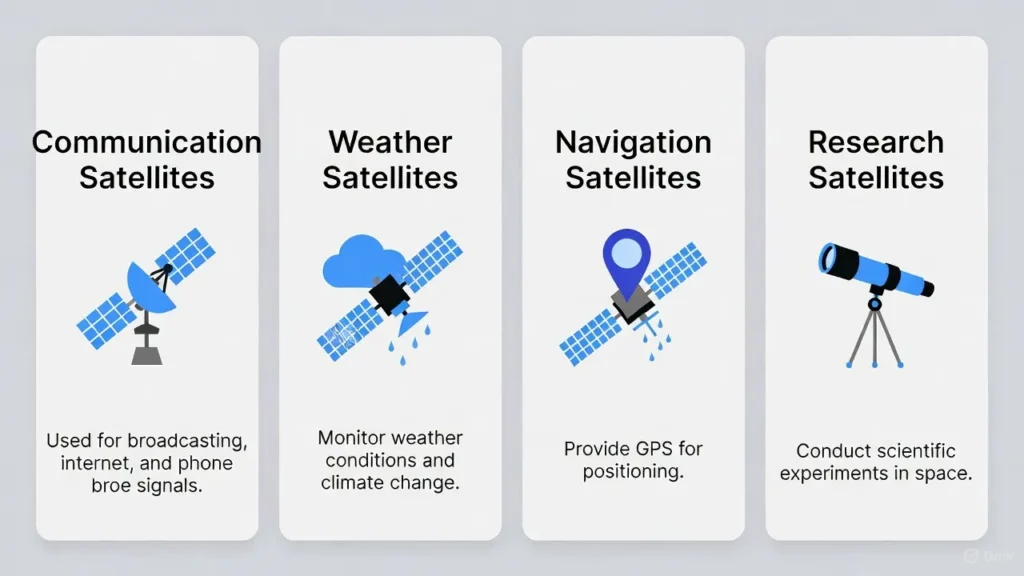
Different types of satellites are designed based on how satellites work in specific applications like communication and navigation.
📡 1. Communication Satellites
These satellites transmit signals for television broadcasting, internet services, and phone communication across long distances.
They enable global connectivity and support modern telecommunications.
🌦️ 2. Weather Satellites
Weather satellites monitor atmospheric conditions, helping meteorologists predict storms, climate patterns, and natural disasters.
They play a critical role in disaster preparedness and climate research.
🧭 3. Navigation Satellites
Navigation satellites power GPS systems used in smartphones, vehicles, aviation, and maritime navigation.
They help users determine accurate location and travel routes.
🔬 4. Scientific and Research Satellites
These satellites collect data about Earth, space, and the universe. They support environmental monitoring, astronomy, and scientific exploration.
🛡️ 5. Military Satellites
Military satellites are used for surveillance, reconnaissance, and secure communication. They contribute to national security and defense operations.
🌍 Real-World Applications of Satellites
Understanding how satellites work helps explain their role in communication, GPS, and weather forecasting.
📱 Global Communication
Satellites enable long-distance communication, including television, phone calls, and internet connectivity in remote areas.
🚗 Navigation and Transportation
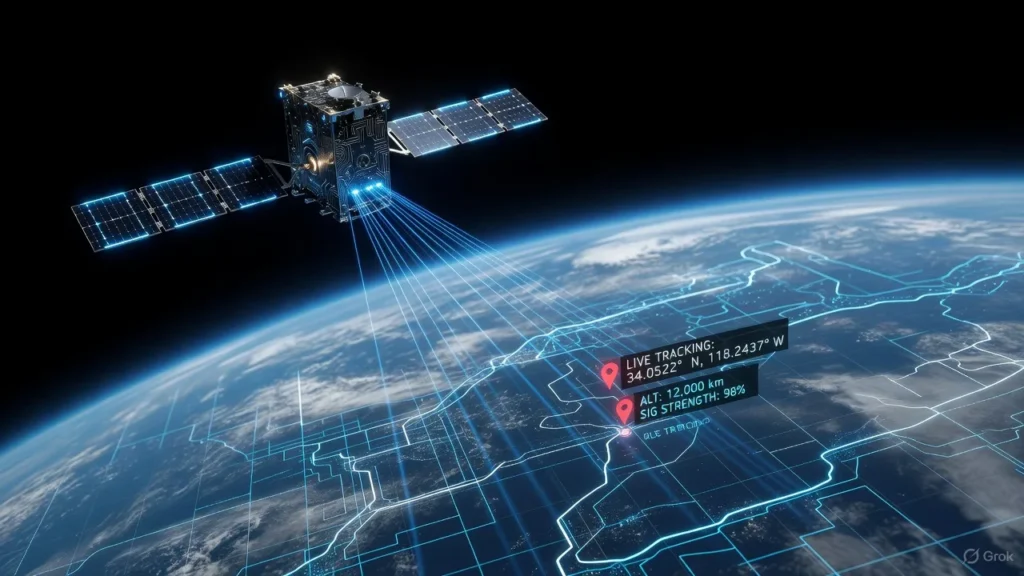
GPS satellites help drivers, pilots, and shipping companies navigate efficiently and safely.
🌱 Environmental Monitoring
Satellites track climate change, deforestation, ocean activity, and wildlife patterns, helping scientists understand Earth’s environment.
🚨 Disaster Management
Satellite imagery assists in monitoring natural disasters such as hurricanes, floods, and wildfires, enabling faster response and recovery.
🛰️ Space Exploration
Satellites also support deep-space missions by relaying data from spacecraft and exploring distant planets.
✔ Benefits of Satellites
- Global connectivity and communication
- Accurate navigation and mapping
- Improved weather forecasting
- Environmental and disaster monitoring
- Support for scientific research
⚠️ Challenges of Satellite Technology
Despite their importance, satellites face challenges such as:
- High development and launch costs
- Space debris risks
- Limited operational lifespan
- Signal interference and cybersecurity concerns
These challenges drive innovation in satellite design and space sustainability.
🔮 The Future of Satellites
Advancements in technology are improving how satellites work, making them faster, smaller, and more efficient. The future of satellite technology is evolving rapidly with:
- Mega-constellations providing global internet coverage
- Smaller and more cost-effective satellites
- AI-powered satellite data analysis
- Advanced Earth observation systems
As space technology advances, satellites will continue to expand connectivity and support global innovation.
🏁 Conclusion
In conclusion, learning how satellites work helps us understand their importance in modern technology. Satellites are an essential part of modern infrastructure, powering communication, navigation, environmental monitoring, and scientific discovery. Although often invisible to everyday users, these space-based systems play a vital role in shaping the digital world and advancing technological progress.
Understanding satellites helps us appreciate the importance of space technology and its impact on daily life.