

Introduction
IaaS (Infrastructure as a Service) is a fundamental cloud computing model that provides virtualized computing resources over the internet. Instead of buying and maintaining physical hardware, businesses can use IaaS to access servers, storage, and networking on demand.
Table of Contents
As organizations move toward digital systems, IaaS has become a popular solution for managing infrastructure efficiently. It allows companies to scale resources quickly while reducing costs and complexity. Understanding IaaS is essential for anyone exploring modern cloud technologies.
What Is IaaS?
IaaS stands for Infrastructure as a Service, a model where cloud providers offer virtualized infrastructure such as servers, storage, and networking over the internet.
In traditional systems, organizations needed to invest in physical hardware and manage it manually. With IaaS, these resources are provided through cloud platforms, allowing users to access them as needed.
IaaS is a key component of cloud computing, forming the foundation on which other services operate.
How IaaS Works
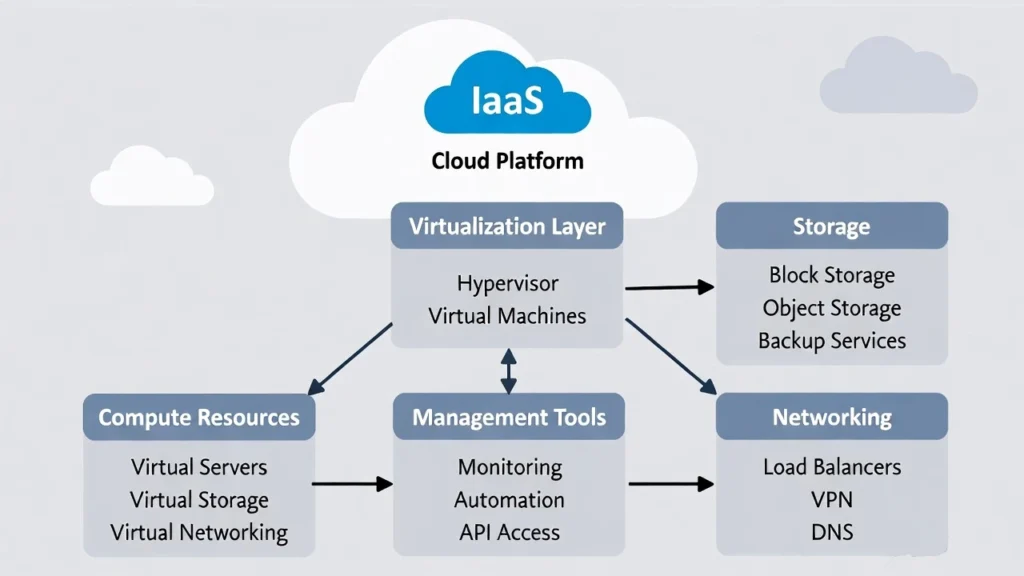
To understand how IaaS works, it is helpful to look at its main components.
Virtual Servers
Cloud providers offer virtual machines that act like physical servers.
Storage Systems
Users can store and manage data using cloud-based storage solutions.
Networking
IaaS includes networking features such as load balancing and virtual networks.
On-Demand Access
Resources can be scaled up or down depending on requirements.
This flexibility makes IaaS highly efficient and adaptable.
Benefits of IaaS
The growing adoption of IaaS is driven by several advantages.
Cost Efficiency
Users do not need to invest in expensive hardware.
Scalability
Resources can be adjusted based on demand.
Flexibility
Organizations can customize infrastructure according to their needs.
Reliability
Cloud providers ensure high availability and backup systems.
Control
Users have more control over infrastructure compared to other cloud models.
Applications of IaaS
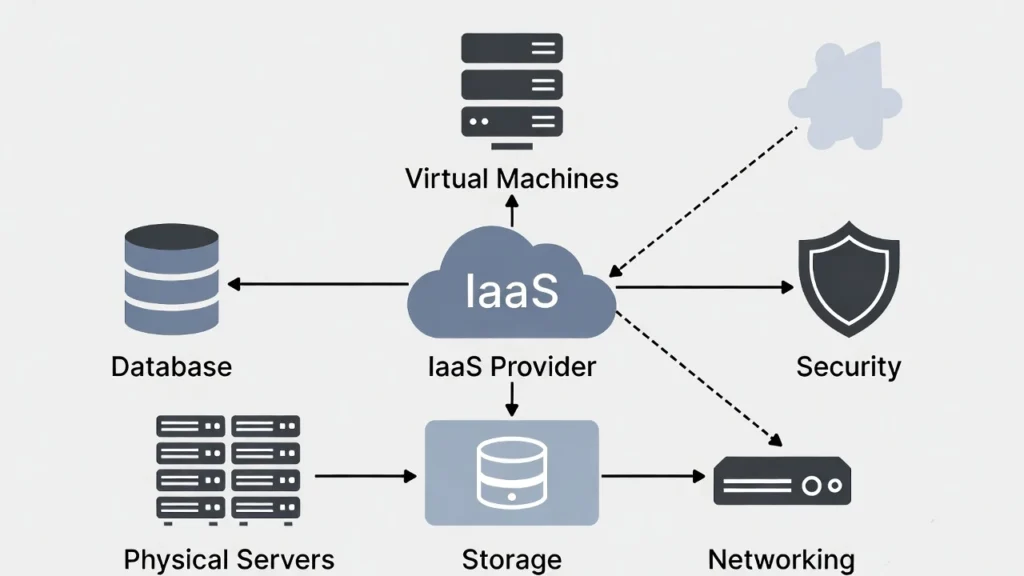
IaaS is widely used in different industries.
Website Hosting
Businesses use IaaS to host websites and web applications.
Data Storage
Organizations store large amounts of data using cloud infrastructure.
Development and Testing
Developers use IaaS environments to test applications.
Disaster Recovery
IaaS helps in backing up data and recovering systems during failures.
IaaS vs PaaS vs SaaS
- IaaS → Provides infrastructure
- PaaS → Provides development platform
- SaaS → Provides ready-to-use software
Each model serves a different purpose in the cloud ecosystem.
Challenges of IaaS
Despite its benefits, IaaS also has some limitations.
Technical Complexity
Managing infrastructure requires technical knowledge.
Security Concerns
Users are responsible for securing their systems.
Cost Management
Improper usage can lead to higher costs.
The Future of IaaS
The future of IaaS is closely linked with advancements in cloud computing, automation, and artificial intelligence. As businesses continue to adopt digital solutions, IaaS platforms are becoming more efficient and scalable.
New technologies are improving performance, security, and resource management. With increasing demand for flexible infrastructure, IaaS will continue to play a key role in supporting modern applications and services.
In addition, the growth of edge computing and hybrid cloud environments is expected to enhance IaaS capabilities further. Businesses will increasingly combine on-premise systems with cloud infrastructure to achieve better performance and flexibility. This evolution will make IaaS more adaptable to different workloads and industry needs.
Conclusion
IaaS is a powerful cloud computing model that provides flexible and scalable infrastructure over the internet. It allows organizations to manage resources efficiently without investing in physical hardware.
As part of the broader cloud ecosystem, IaaS supports modern technologies and enables businesses to adapt quickly to changing needs. It remains a critical component of digital transformation and innovation.