

Machine Learning models don’t become smart instantly. They learn gradually through a structured process that involves training, testing, and making predictions. Understanding this process is essential for anyone who wants to truly understand how Machine Learning works behind the scenes.
In this beginner-friendly article, we’ll explain how Machine Learning models learn, step by step, using simple language and real-world examples.
What Is a Machine Learning Model?
A Machine Learning model is a program trained to recognize patterns in data and make decisions or predictions based on those patterns.
Instead of following fixed rules, the model:
- Learns from examples
- Adjusts itself over time
- Improves accuracy with more data
Think of a model as a student, and data as the study material.
The Three Main Stages of Learning
Every Machine Learning model goes through three key stages:
- Training
- Testing
- Prediction
Let’s look at each one in detail.
1. Training a Machine Learning Model
Training is the stage where the model learns from data.
What happens during training?
- The model is given a dataset
- It looks for patterns and relationships
- It makes guesses
- Errors are measured
- The model adjusts itself to reduce errors
This process repeats many times until performance improves.
Example
If the task is to identify spam emails:
- Emails are labeled as “spam” or “not spam”
- The model learns which words and patterns are common in spam messages

What Is Training Data?
Training data is the information used to teach the model. It must be:
- Relevant
- Accurate
- Large enough to cover many scenarios
Poor-quality data leads to poor model performance, no matter how advanced the algorithm is.
2. Testing a Machine Learning Model
After training, the model must be tested to see how well it has learned.
Why testing is important
- Ensures the model works on new data
- Checks for overfitting (memorizing instead of learning)
- Measures accuracy and reliability
How testing works
- The model is given data it has never seen before
- Predictions are compared with correct answers
- Performance metrics are calculated
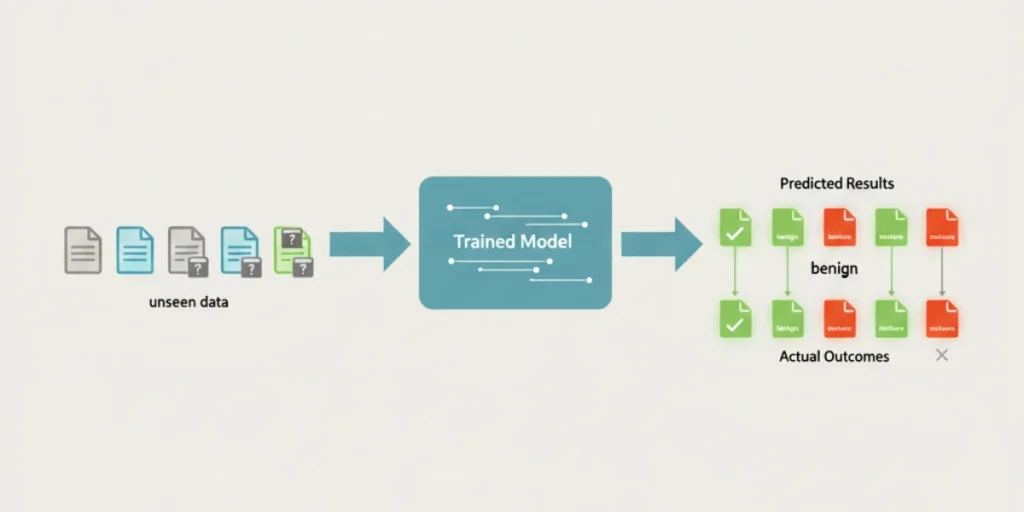
Training vs Testing Data (Simple Explanation)
| Data Type | Purpose |
|---|---|
| Training Data | Teach the model |
| Testing Data | Evaluate performance |
Using separate datasets helps ensure the model truly understands patterns.
3. Making Predictions
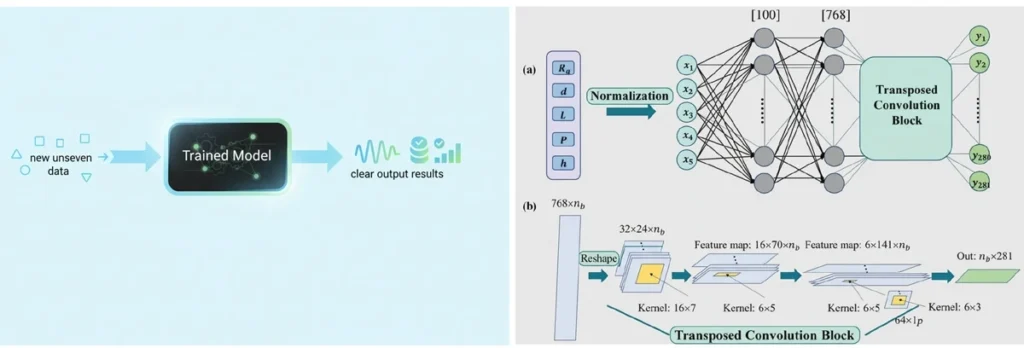
Once training and testing are complete, the model is ready to make predictions.
What predictions mean
Predictions are the model’s outputs when it processes new data.
Examples:
- Predicting house prices
- Recognizing faces
- Recommending products
- Detecting fraud
Each prediction is based on what the model learned earlier.
Why Models Improve Over Time
Machine Learning models improve because:
- More data becomes available
- Training is repeated
- Errors are continuously reduced
This ability to improve is what makes Machine Learning powerful.
Common Problems During Learning
Overfitting
The model performs well on training data but poorly on new data.
Underfitting
The model is too simple and fails to capture patterns.
Balancing these is key to good performance.
Real-World Example: Recommendation Systems
Let’s take an online shopping platform:
- Training: Learn from past user behavior
- Testing: Check accuracy on new users
- Prediction: Suggest products in real time
This cycle runs continuously in the background.
How This Fits into Artificial Intelligence
Machine Learning is a core part of Artificial Intelligence, enabling systems to adapt and improve automatically rather than relying on fixed programming.
Final Thoughts
Understanding how Machine Learning models learn—through training, testing, and prediction—helps demystify modern AI systems. These steps ensure models are accurate, reliable, and useful in real-world applications.
As data grows, Machine Learning models will continue to evolve and shape the future of technology.