
Introduction
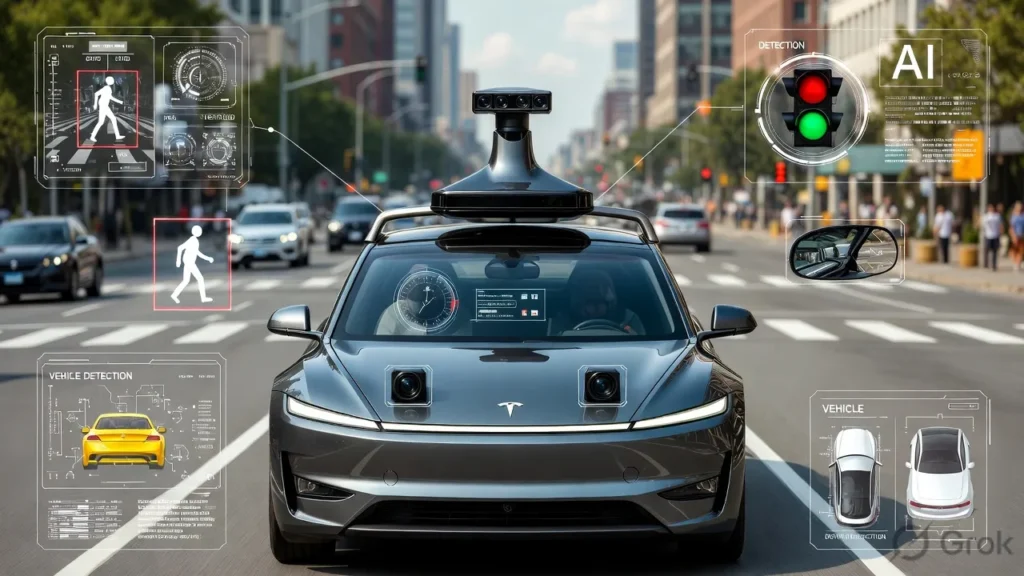
AI in self-driving cars is transforming the future of transportation by enabling vehicles to operate without human intervention. In this guide, we will explore how artificial intelligence powers autonomous vehicles, the key technologies involved, and how these systems ensure safety and efficiency on the road.
Table of Contents
Automotive companies and technology firms are investing heavily in autonomous driving systems to improve road safety, reduce traffic congestion, and enhance transportation efficiency.
Artificial intelligence plays a central role in enabling self-driving cars to understand their surroundings and respond to changing road conditions in real time.
What Are Self-Driving Cars?
Self-driving cars are vehicles equipped with sensors, cameras, and artificial intelligence systems that allow them to drive without direct human control.
These vehicles continuously collect data from their surroundings and use AI algorithms to interpret that information. The system then makes decisions such as accelerating, braking, turning, and avoiding obstacles.
Autonomous vehicles are often classified into different levels based on how much control the vehicle has compared to the human driver.
How AI in Self-Driving Cars Works
AI in self-driving cars uses advanced algorithms, sensors, and machine learning models to understand the environment and make real-time driving decisions.
Computer Vision
Computer vision allows self-driving cars to analyze visual information from cameras. The system can detect road signs, pedestrians, vehicles, and traffic lights.
Machine Learning
Machine learning algorithms help autonomous vehicles learn from vast amounts of driving data. By analyzing patterns, the system improves its ability to make safe driving decisions.
Sensors and Lidar
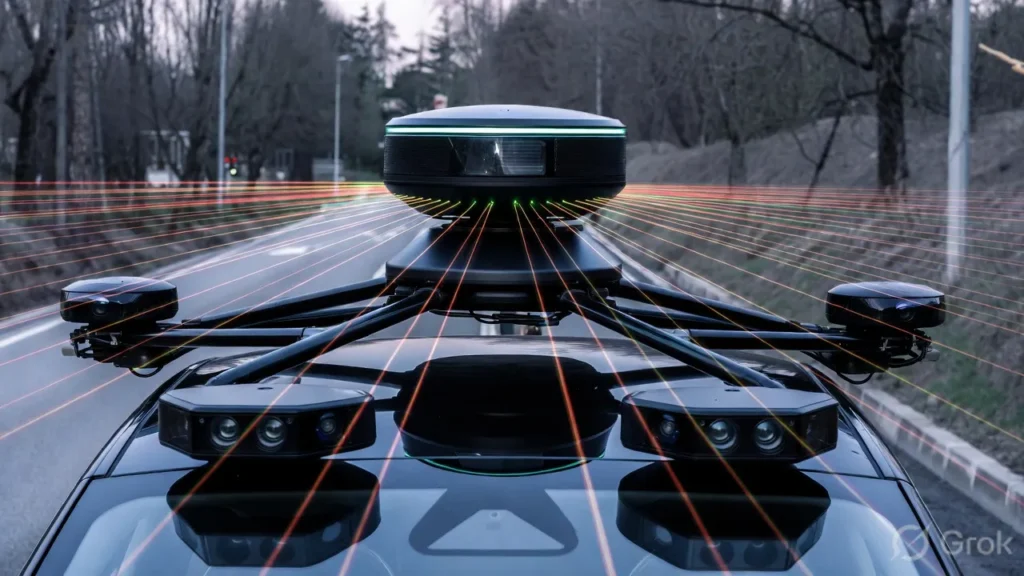
Autonomous vehicles rely on sensors such as radar and lidar to measure distances and detect objects around the vehicle.
These sensors help the car build a detailed map of its environment.
Edge AI
Many self-driving systems use Edge AI to process information directly inside the vehicle instead of sending data to cloud servers. This enables faster decision-making.
Navigation Systems
Autonomous vehicles use high-precision GPS and mapping technologies to determine their location and plan routes.
These technologies are essential for AI in self-driving cars to function safely and efficiently.
Benefits of Self-Driving Cars
Autonomous vehicles offer several potential benefits.
Improved Road Safety
Many traffic accidents occur due to human error. AI systems can monitor road conditions continuously and react faster than humans.
Reduced Traffic Congestion
Autonomous vehicles can communicate with each other and optimize driving patterns, which may reduce traffic jams.
Increased Accessibility
Self-driving technology may help elderly or disabled individuals travel more easily.
Greater Fuel Efficiency
AI systems can optimize acceleration and braking to reduce fuel consumption.
Challenges of Autonomous Driving
Despite rapid progress, several challenges remain.
Safety and Reliability
Autonomous vehicles must be able to operate safely in complex and unpredictable environments.
Regulation
Governments must develop laws and regulations to govern the use of self-driving technology.
Cybersecurity
Connected vehicles may be vulnerable to cyberattacks if proper security measures are not implemented.
The Future of Autonomous Vehicles
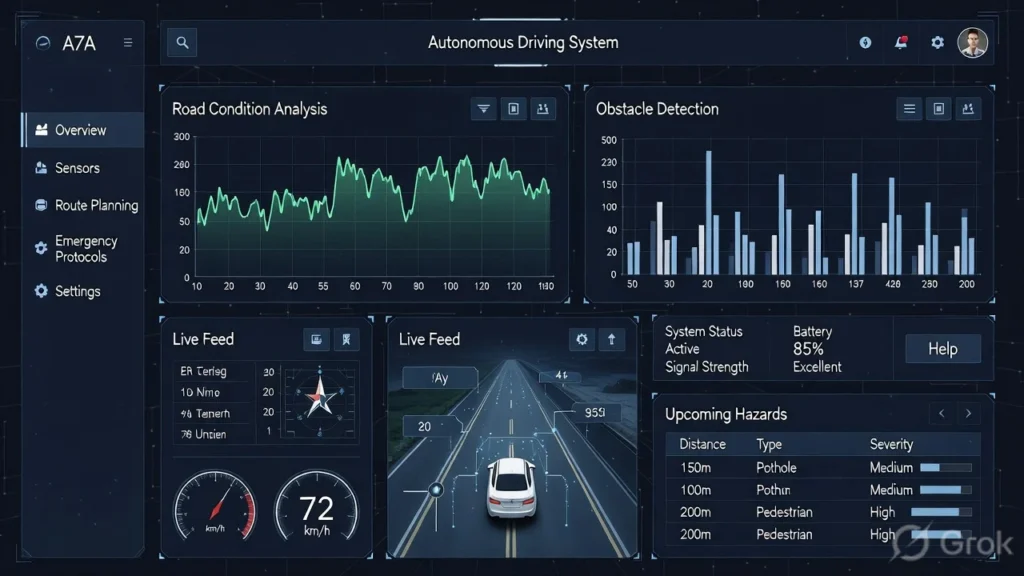
The future of transportation may include widespread adoption of autonomous vehicles. Advances in artificial intelligence, sensor technology, and connectivity will continue to improve the capabilities of self-driving systems.
Researchers are working to create safer and more efficient vehicles that can operate in diverse environments.
In the coming decades, autonomous transportation may transform how people commute, deliver goods, and move around cities.
Conclusion
Self-driving cars represent one of the most ambitious applications of artificial intelligence. By combining computer vision, machine learning, sensors, and advanced navigation systems, autonomous vehicles can analyze their surroundings and make driving decisions in real time.
Although challenges remain, ongoing technological innovation is bringing us closer to a future where intelligent vehicles play a major role in transportation.
As technology evolves, AI in self-driving cars will continue to improve safety, efficiency, and the future of transportation.