
Introduction
Cybersecurity has become one of the most important challenges in today’s digital world. As businesses, governments, and individuals rely more on the internet, cyber threats such as hacking, malware, and data breaches continue to grow.
Table of Contents
Traditional cybersecurity systems often struggle to detect sophisticated attacks in real time. This is where artificial intelligence (AI) plays a critical role. AI technologies can analyze vast amounts of data, identify unusual patterns, and detect potential threats much faster than traditional systems.
By combining AI with cybersecurity tools, organizations can improve their ability to detect, prevent, and respond to cyberattacks.
What Is AI in Cybersecurity?
Artificial intelligence in cybersecurity refers to the use of AI technologies and machine learning algorithms to detect and prevent cyber threats.
AI systems analyze large volumes of network data, user behavior, and system activities to identify suspicious patterns. These systems continuously learn from new data and improve their ability to detect threats.
How AI Improves Cybersecurity
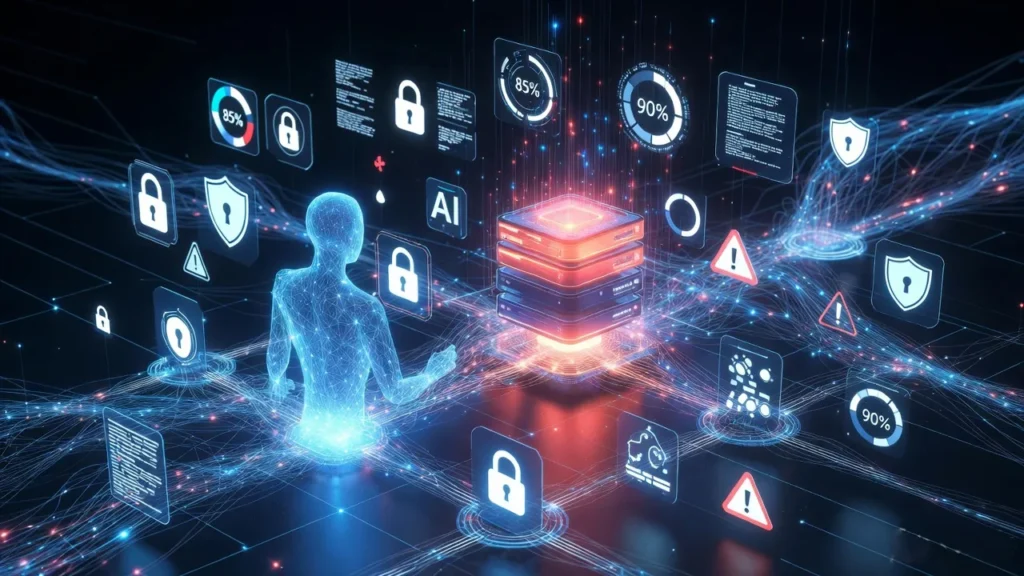
Artificial intelligence enhances cybersecurity in several important ways.
1. Threat Detection
AI systems can monitor network activity and detect unusual behavior that may indicate a cyberattack. Machine learning algorithms can analyze patterns and identify potential threats before they cause damage.
2. Malware Detection
Cybercriminals constantly create new malware that traditional security tools may not recognize. AI-powered security systems can detect malware by analyzing its behavior rather than relying only on known signatures.
3. Fraud Detection
Financial institutions use AI systems to detect suspicious transactions and prevent fraud. AI can quickly analyze millions of transactions and identify unusual patterns.
4. Automated Security Response
AI can automate many security processes. When a threat is detected, AI systems can automatically block suspicious activities, isolate infected systems, or alert security teams.
5. User Behavior Analysis
AI can monitor how users interact with systems and identify abnormal behavior. For example, if a user suddenly logs in from an unusual location or attempts to access restricted data, the system may trigger a security alert.
6. Predicting Future Cyber Threats
AI systems can analyze historical attack data to predict potential future threats. This helps organizations strengthen their defenses before attacks occur.
Benefits of AI in Cybersecurity
Artificial intelligence provides several advantages for modern cybersecurity systems.
1. Faster Threat Detection
AI can analyze data in real time and detect threats much faster than manual monitoring.
2. Improved Accuracy
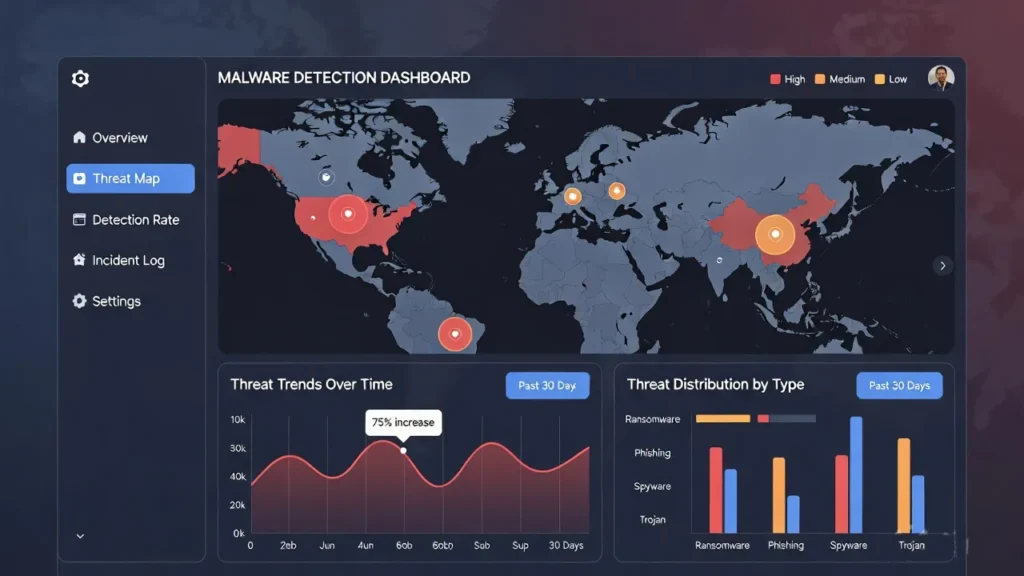
Machine learning models reduce false alarms and improve the accuracy of threat detection.
3. Better Security Automation
AI can automate routine security tasks, allowing cybersecurity professionals to focus on more complex threats.
4. Continuous Learning
AI systems continuously learn from new data, improving their ability to detect evolving cyber threats.
Challenges of AI in Cybersecurity
Despite its benefits, AI in cybersecurity also faces several challenges.
1. Data Privacy Concerns
AI systems often require large amounts of data, which may raise privacy concerns.
2. AI-Powered Cyberattacks
Cybercriminals may also use artificial intelligence to develop more advanced attacks.
3. Implementation Complexity
Deploying AI-based cybersecurity systems requires specialized expertise and significant resources.
The Future of AI in Cybersecurity
As cyber threats become more sophisticated, artificial intelligence will play an increasingly important role in digital security. AI-powered systems will help organizations detect threats faster, respond to attacks more effectively, and protect sensitive data.
Future cybersecurity solutions may combine AI with technologies such as edge computing, blockchain, and advanced analytics to create stronger and more adaptive security systems.
Conclusion
Artificial intelligence is transforming cybersecurity by improving threat detection, automating security processes, and enhancing digital protection systems. As cyber threats continue to evolve, AI technologies will become an essential tool for protecting data, networks, and online systems.
Organizations that adopt AI-driven security solutions will be better prepared to defend against the complex cyber threats of the future.