
Introduction
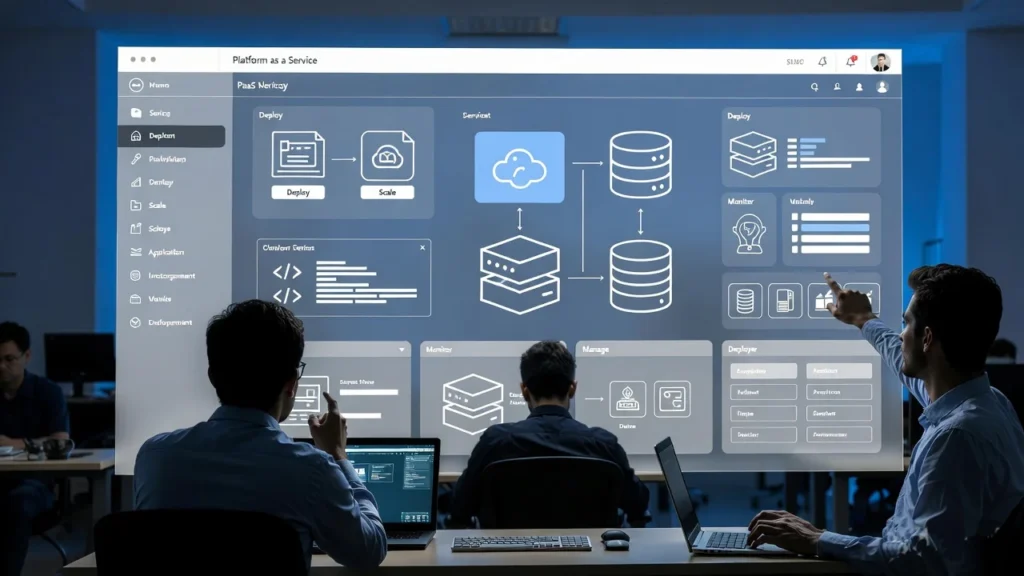
PaaS (Platform as a Service) is an important model in modern cloud environments that allows developers to build, test, and deploy applications efficiently. Instead of managing hardware and system software, developers can focus on creating applications using a ready-to-use platform.
Table of Contents
With the growth of digital services, PaaS has become a popular choice for organizations that want faster development and reduced complexity. Understanding PaaS helps explain how modern applications are created and delivered.
What Is PaaS?
PaaS stands for Platform as a Service, a cloud-based model that provides a complete environment for application development. It includes tools, frameworks, and infrastructure required to build and run applications.
In traditional development, teams needed to manage servers, operating systems, and storage. With PaaS, all these components are handled by the service provider, allowing developers to focus on coding and innovation.
PaaS is a key part of cloud computing, helping simplify application development.
How PaaS Works
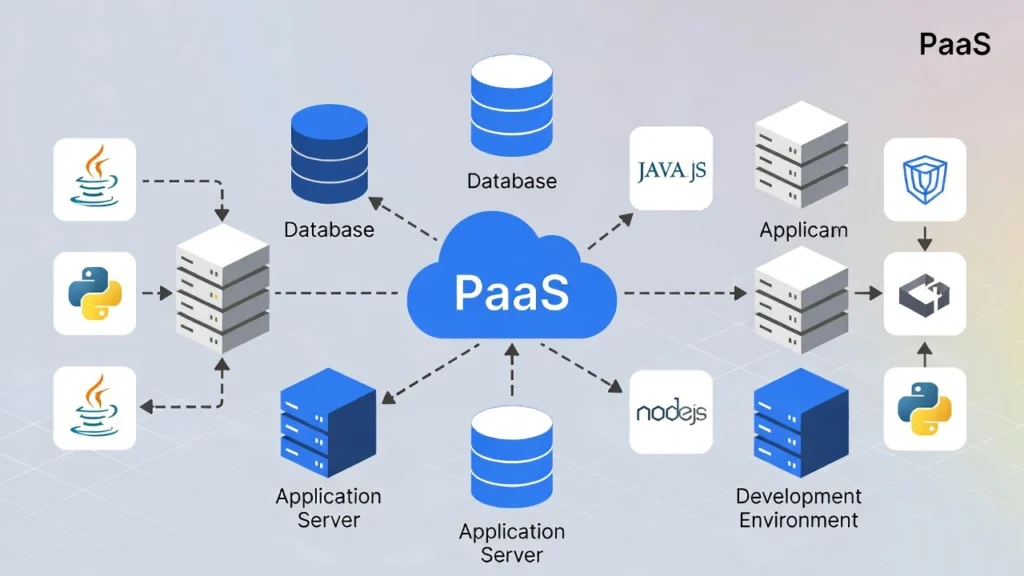
To understand how PaaS works, it is useful to look at its main components.
Cloud Infrastructure
PaaS platforms run on cloud servers maintained by providers.
Development Tools
Developers get access to built-in tools and frameworks.
Application Deployment
Applications can be deployed directly on the platform.
Maintenance and Updates
The provider manages system updates, security, and maintenance.
This process allows PaaS to reduce complexity and improve efficiency.
Benefits of PaaS
The increasing adoption of PaaS is driven by several advantages.
Faster Development
PaaS provides ready-made tools that speed up application development.
Cost Efficiency
There is no need to invest in hardware or infrastructure.
Scalability
Applications can easily scale as user demand grows.
Simplified Management
Developers do not need to manage servers or operating systems.
Collaboration
Teams can work together on the same platform from different locations.
Applications of PaaS

PaaS is widely used across various industries.
Web Development
Developers use PaaS to build and deploy websites and web applications.
Mobile Applications
It supports mobile app development with integrated tools.
Business Software
Organizations use PaaS to create custom business solutions.
API Development
PaaS platforms are commonly used to develop and manage APIs.
PaaS vs SaaS vs IaaS
Understanding how PaaS compares with other cloud models is important.
- SaaS → Provides ready-to-use software
- PaaS → Provides a platform for development
- IaaS → Provides infrastructure like servers and storage
Each model serves a different role within cloud systems.
Challenges of PaaS
Despite its advantages, PaaS also has some limitations.
Vendor Lock-in
Switching providers can be difficult once applications are built on a platform.
Limited Control
Developers have less control over infrastructure settings.
Security Concerns
Data security depends on the provider’s system.
The Future of PaaS
The future of PaaS is closely connected with advancements in cloud computing, artificial intelligence, and automation. As businesses continue to adopt digital solutions, PaaS platforms are becoming more powerful and flexible.
Modern platforms are integrating AI-driven tools, automation features, and improved security measures. These advancements will make application development faster and more efficient. As demand for scalable solutions grows, PaaS will play a key role in shaping the future of software development.
Conclusion
PaaS is a powerful model that simplifies application development by providing a complete platform for building and deploying software. It reduces complexity, improves efficiency, and allows developers to focus on innovation.
As part of the broader cloud ecosystem, PaaS continues to grow in importance. With ongoing advancements in technology, it will remain an essential tool for creating modern applications and supporting digital transformation.