

Introduction
SaaS (Software as a Service) is one of the most widely used software delivery models in today’s digital world. Instead of installing applications on a computer, users can access software directly through the internet. This modern approach has made SaaS an essential part of how businesses and individuals use technology.
Table of Contents
From email services and file storage to collaboration tools, many everyday applications rely on SaaS. It simplifies access to software and reduces the need for complex installations and maintenance. Understanding SaaS is important for anyone exploring cloud-based technologies and digital services.
What Is SaaS?
SaaS stands for Software as a Service, a model in which software applications are hosted on remote servers and delivered to users via the internet.
In traditional systems, users needed to install software on their devices. With SaaS, applications run on cloud servers, and users simply access them through a web browser.
This model is a major part of cloud computing because it allows users to use software without worrying about hardware or system management.
How SaaS Works
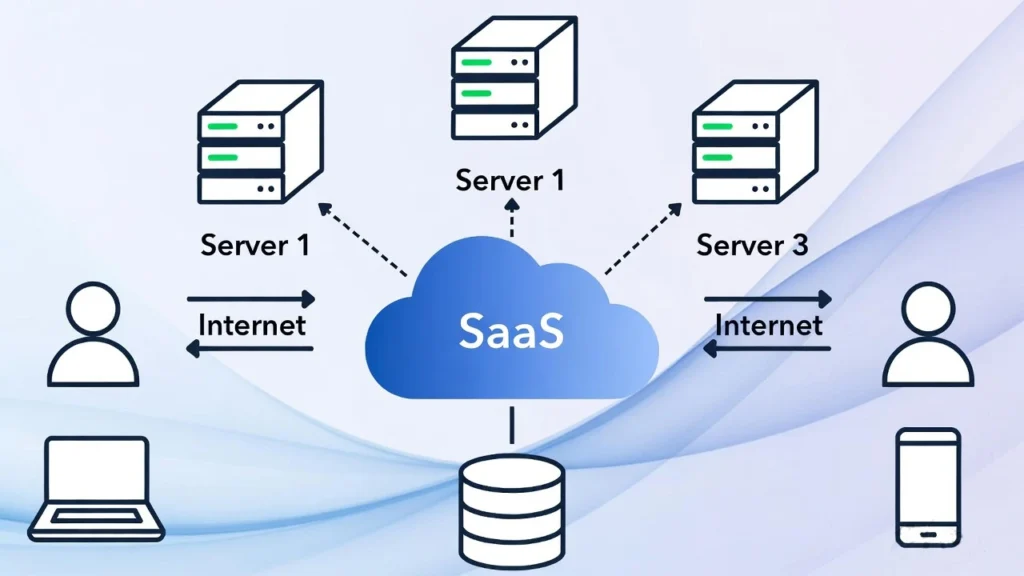
To understand SaaS, it is helpful to look at how it operates.
Cloud Hosting
Applications are hosted on cloud servers instead of local machines.
Internet Access
Users access the software through a browser or app.
Subscription Model
Most SaaS services use a subscription-based pricing system.
Automatic Updates
The provider handles updates and maintenance, ensuring users always have the latest version without manual effort.
Benefits of SaaS
The growing popularity of SaaS is due to several advantages.
Easy Accessibility
Users can access SaaS applications from anywhere with an internet connection.
Cost Efficiency
There is no need to buy expensive hardware or software licenses.
Scalability
Businesses can easily scale their usage based on needs.
Automatic Maintenance
The service provider manages updates and maintenance.
Collaboration
Teams can work together in real time using SaaS tools.
Applications of SaaS

SaaS is widely used across industries.
Business Tools
Companies use SaaS for communication, project management, and customer relationship management systems.
Education
Online learning platforms rely on SaaS to deliver courses.
Cloud Services
Many cloud platforms offer SaaS-based applications.
SaaS vs Traditional Software
Understanding the difference between SaaS and traditional software is important.
| Feature | SaaS | SaaS |
| Installation | Not required | Required |
| Access | Online | Local device |
| Updates | Online | Manual |
| Updates | Subscription | One-time purchase |
Challenges of SaaS
Despite its benefits, SaaS also has some limitations.
Internet Dependency
SaaS requires a stable internet connection.
Data Security
Storing data online raises security concerns.
Limited Control
Users have less control over software customization.
The Future of SaaS
The future of SaaS is closely linked with advancements in cloud computing, artificial intelligence, and automation. As more businesses move to digital platforms, SaaS solutions are expected to become even more advanced and widely used.
New features such as AI-powered automation and enhanced security will make SaaS platforms more efficient and reliable. The demand for flexible and scalable software solutions will continue to drive the growth of SaaS in the coming years.
Conclusion
SaaS has transformed how software is delivered and used by making applications accessible through the internet. It offers flexibility, cost efficiency, and ease of use, making it a popular choice for both businesses and individuals.
As technology continues to evolve, SaaS will remain an important part of modern digital infrastructure, helping organizations operate more efficiently and adapt to changing needs.