
Introduction
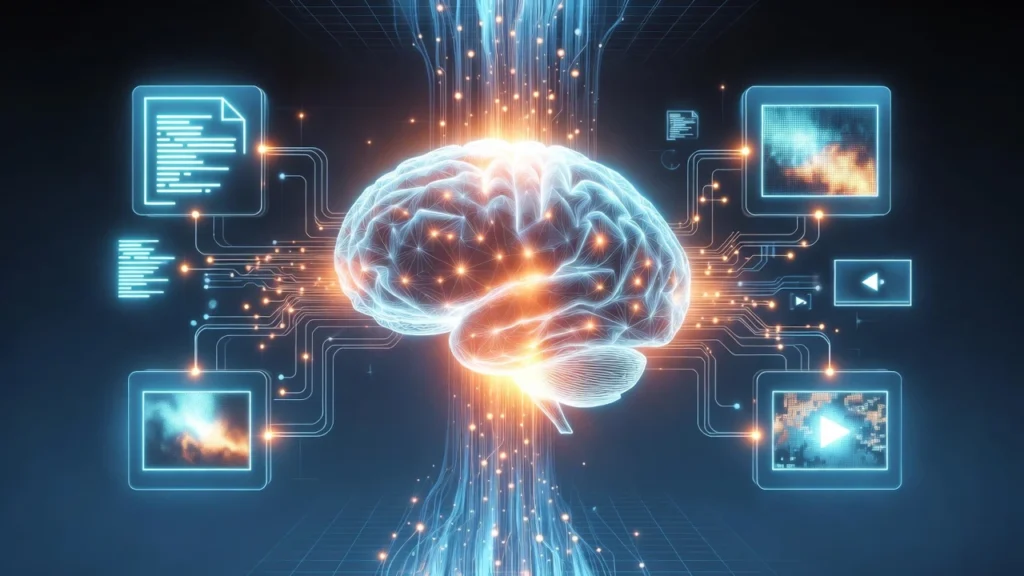
Artificial Intelligence has evolved rapidly in recent years, but one of the most exciting breakthroughs is Generative AI. Unlike traditional AI systems that analyze data or make predictions, generative AI can create entirely new content—from text and images to music and videos.
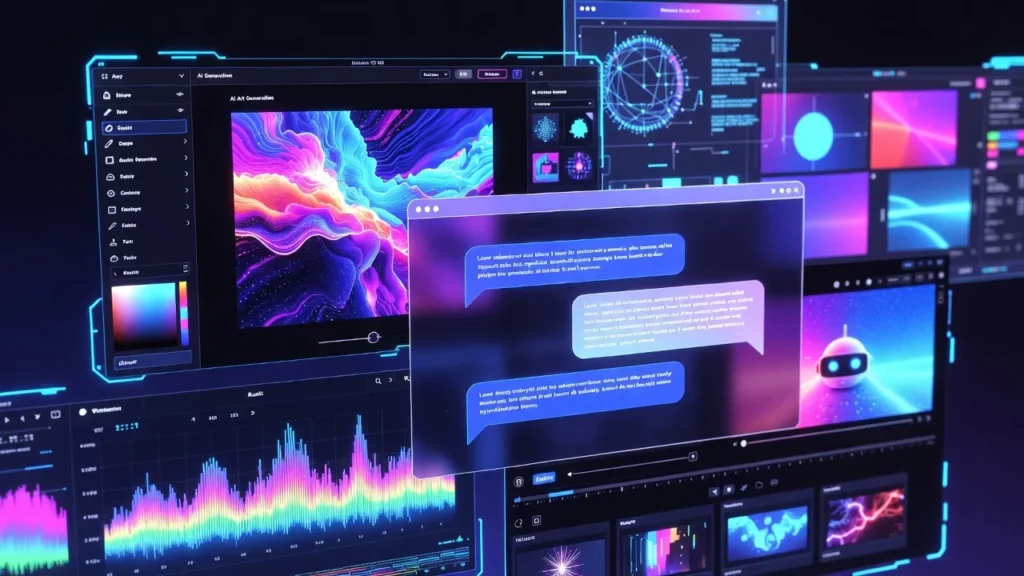
From chatbots that write articles to tools that generate realistic artwork, generative AI is transforming creativity, productivity, and innovation across industries.
In this beginner-friendly guide, we’ll explore what generative AI is, how it works, real-world examples, benefits, risks, and its future impact.
What Is Generative AI?
Generative AI is a type of artificial intelligence designed to produce new content based on patterns learned from existing data.
This content can include:
- Text
- Images
- Videos
- Audio
- Code
Instead of simply analyzing information, generative AI creates original outputs that resemble human-made content.
How Generative AI Works
Generative AI relies on advanced machine learning techniques, especially deep learning and neural networks.
Key technologies include:
Large Language Models (LLMs)
These models generate human-like text by predicting the next word in a sequence.
Generative Adversarial Networks (GANs)
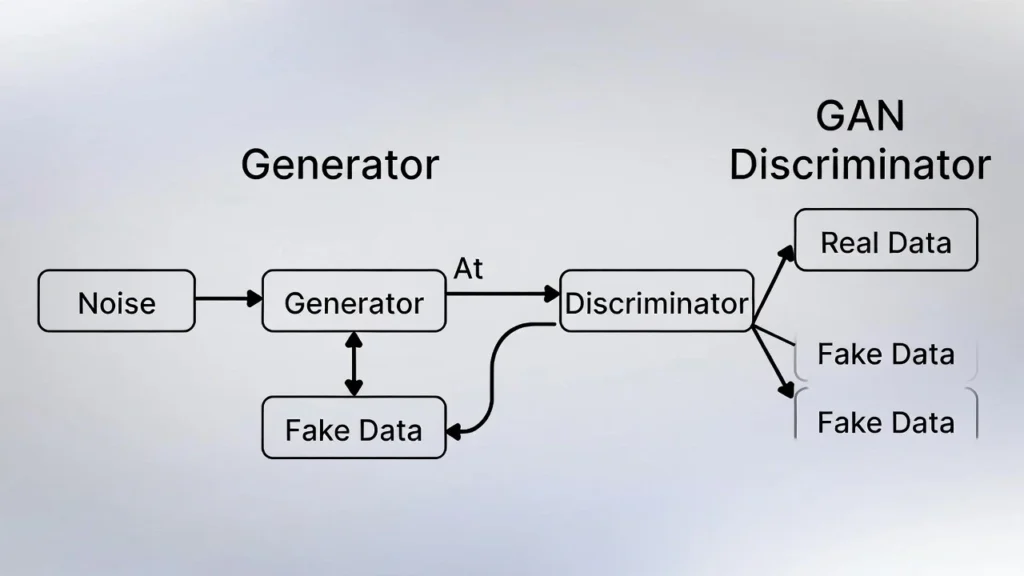
GANs use two neural networks that compete with each other to produce highly realistic images and videos.
Diffusion Models
Diffusion models generate images by gradually refining random noise into detailed visuals.
Real-World Examples of Generative AI
Generative AI is already widely used in daily life and business:
Content Creation
AI tools can write blogs, emails, scripts, and marketing copy.
Image Generation
AI can create artwork, illustrations, and photorealistic images from text prompts.
Music and Audio
AI can compose music, generate voiceovers, and clone voices.
Video Creation
AI tools can generate animations, short videos, and visual effects.
Code Generation
Developers use AI assistants to write and debug code faster.
Applications Across Industries
Healthcare
- Medical imaging enhancement
- Drug discovery support
- Synthetic data generation
Education
- Personalized learning content
- AI tutors
- Automated lesson creation
Gaming
- Procedural world generation
- AI-generated characters and storylines
Marketing
- Ad copy generation
- Product descriptions
- Social media content
Benefits of Generative AI
Increased Productivity
Automates repetitive creative tasks.
Enhanced Creativity
Helps users brainstorm and explore ideas.
Cost Efficiency
Reduces production time and expenses.
Accessibility
Enables individuals without technical skills to create content.
Risks and Challenges
Misinformation
AI-generated content can spread false information.
Copyright Concerns
Ownership of AI-generated content is still debated.
Bias in Training Data
Models may inherit biases from datasets.
Deepfakes
AI-generated videos and audio can be misused.
The Future of Generative AI
The future of generative AI may include:
- AI-powered filmmaking
- Fully personalized virtual assistants
- Realistic virtual worlds
- Human-AI creative collaboration
- AI-driven scientific research
As models become more advanced, generative AI is expected to reshape industries and redefine digital creativity.
Conclusion
Generative AI represents a major leap in artificial intelligence, enabling machines to create content that closely resembles human work. While it offers immense benefits in productivity and creativity, it also raises ethical and societal challenges that require careful consideration.
Understanding generative AI is essential for anyone interested in the future of technology, innovation, and digital transformation.