
Introduction
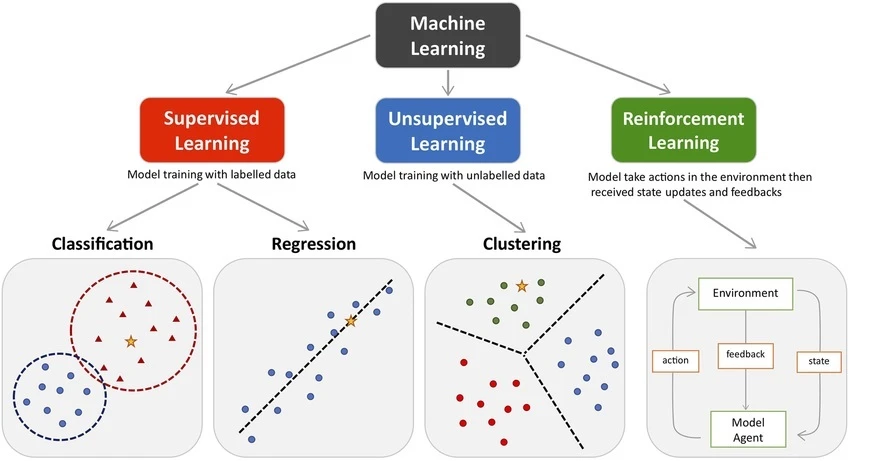
Machine Learning is one of the most important technologies behind modern Artificial Intelligence. But not all Machine Learning works the same way. In fact, there are three main types of Machine Learning, each designed for different kinds of problems.
In this article, we’ll explain Supervised Learning, Unsupervised Learning, and Reinforcement Learning in simple terms, with clear examples anyone can understand.
What Are the Main Types of Machine Learning?
Machine Learning models learn from data, but how they learn depends on the type of learning used. The three main types are:
- Supervised Learning
- Unsupervised Learning
- Reinforcement Learning
Each type has a different learning approach and is used for different real-world tasks.
1. Supervised Learning
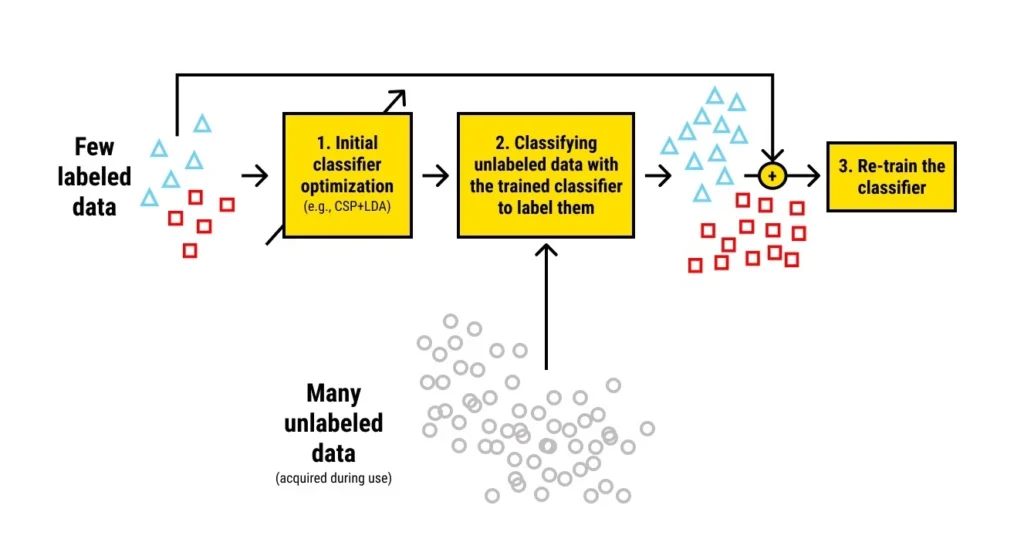
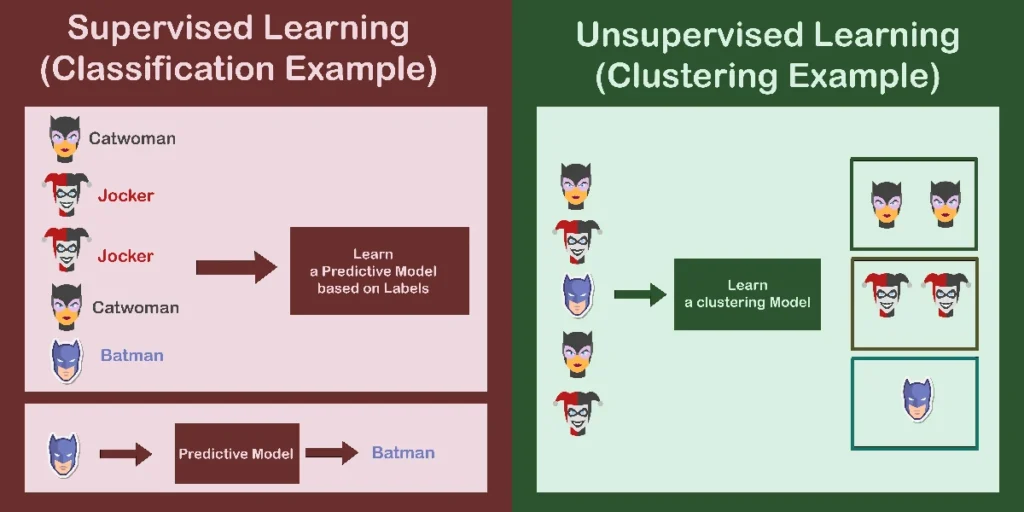
Supervised Learning is the most common type of Machine Learning. In this method, the system is trained using labeled data, meaning the correct answers are already known.
The model learns by comparing its predictions with the correct answers and gradually improving its accuracy.
How Supervised Learning Works
- Input data is labeled
- The model learns the relationship between input and output
- Errors are corrected during training
- Performance improves over time
Examples of Supervised Learning
- Email spam detection (spam / not spam)
- Image classification (cat / dog)
- House price prediction
- Medical diagnosis based on test results
2. Unsupervised Learning
Unsupervised Learning works with unlabeled data. The system is not told what the correct answers are. Instead, it tries to discover patterns, structures, or relationships on its own.
This type of learning is useful when you don’t know what you’re looking for in advance.
How Unsupervised Learning Works
- No labeled answers are provided
- The model finds hidden patterns
- Data is grouped or organized automatically
Examples of Unsupervised Learning
- Customer segmentation
- Grouping similar news articles
- Detecting unusual behavior in data
- Organizing large datasets
3. Reinforcement Learning
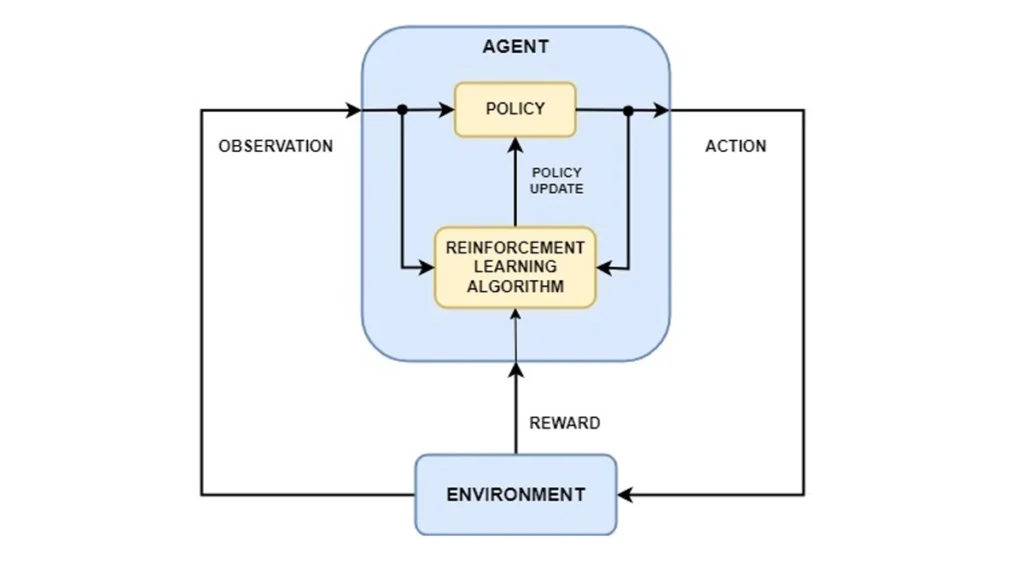
Reinforcement Learning is different from the other two types. Instead of learning from data directly, the system learns through trial and error.
The model receives:
- Rewards for correct actions
- Penalties for wrong actions
Over time, it learns the best strategy to achieve its goal.
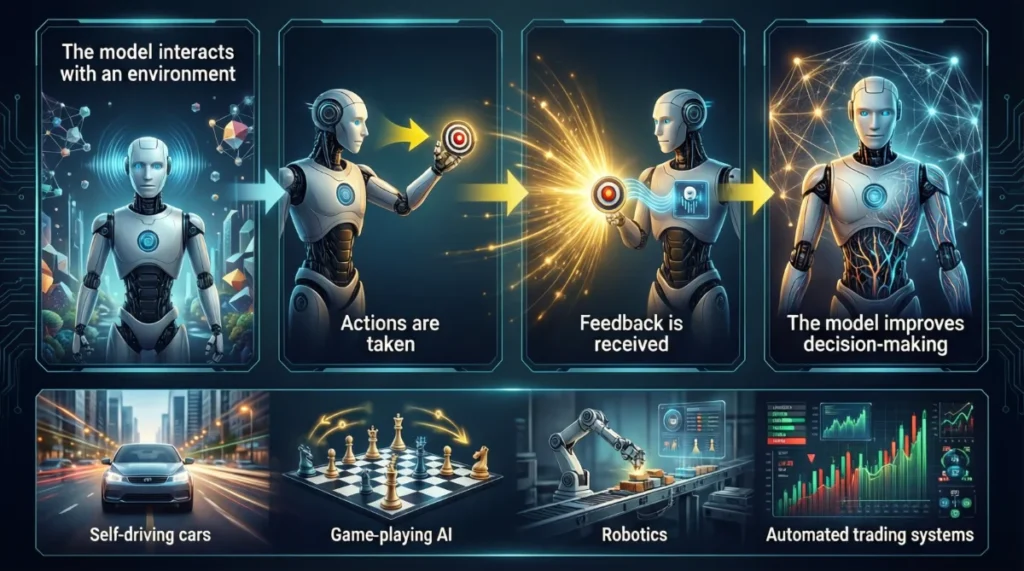
How Reinforcement Learning Works
- The model interacts with an environment
- Actions are taken
- Feedback is received
- The model improves decision-making
Examples of Reinforcement Learning
- Self-driving cars
- Game-playing AI
- Robotics
- Automated trading systems
Key Differences Between the Three Types
Here’s a simple comparison to make things clearer:
| Type | Data Used | Learning Method | Common Use |
|---|---|---|---|
| Supervised Learning | Labeled | Learn from correct answers | Predictions |
| Unsupervised Learning | Unlabeled | Discover patterns | Grouping |
| Reinforcement Learning | Interaction | Reward-based learning | Decision-making |
Which Type of Machine Learning Is Most Used?
- Supervised Learning is the most widely used today.
- Unsupervised Learning is useful for exploration and analysis.
- Reinforcement Learning is powerful but requires more computing resources.
Not every problem needs advanced learning methods. Often, simpler approaches work best.
How These Types Work Together
In real applications, systems often combine multiple learning types. For example:
- Supervised Learning for predictions
- Unsupervised Learning for data analysis
- Reinforcement Learning for decision optimization
This combination allows Machine Learning systems to be more flexible and effective.
Why Understanding These Types Matters
Knowing the different types of Machine Learning helps:
- Beginners understand AI concepts clearly
- Businesses choose the right solutions
- Developers design better systems
- Users trust technology more
Final Thoughts
Supervised, Unsupervised, and Reinforcement Learning are the foundations of modern Machine Learning. Each type has a unique learning style and purpose.
Understanding these basics gives you a strong foundation for exploring more advanced topics in Artificial Intelligence and Machine Learning.