

Introduction
Artificial intelligence in healthcare is transforming how medical professionals diagnose diseases, manage patient data, and deliver treatment. In this guide, we will explore its applications, benefits, and how it is shaping the future of modern medicine.
By analyzing large amounts of medical data, AI systems can identify patterns that may be difficult for humans to detect. These technologies help doctors make faster and more accurate decisions while improving efficiency in healthcare systems.
In this article, we explore how artificial intelligence is changing healthcare and the key applications that are shaping the future of medicine.
Table of Contents
How Artificial Intelligence in Healthcare Works
Artificial intelligence in healthcare uses advanced algorithms, machine learning, and data analysis to improve diagnosis, treatment, and patient care.
AI systems can process vast amounts of information such as medical records, laboratory results, imaging data, and research studies.
These systems often rely on machine learning and deep learning models to identify patterns and make predictions.
1. Medical Image Analysis

One of the most important applications of AI in healthcare is analyzing medical images such as X-rays, CT scans, and MRIs.
Computer vision algorithms can detect abnormalities and assist doctors in diagnosing conditions such as cancer, fractures, and neurological disorders.
2. Disease Prediction and Early Diagnosis
Artificial intelligence in healthcare plays a key role in early disease detection and accurate diagnosis.
For example, AI systems can evaluate genetic information, lifestyle data, and medical history to identify individuals at risk of conditions such as heart disease or diabetes.
Early diagnosis allows doctors to start treatment sooner and improve patient outcomes.
3. Drug Discovery
Developing new medicines traditionally takes many years. AI can speed up this process by analyzing biological data and identifying promising drug candidates.
Machine learning algorithms can evaluate thousands of chemical compounds and predict which ones are most likely to be effective.
This approach helps pharmaceutical companies accelerate research and reduce development costs.
4. Personalized Medicine
AI enables doctors to design treatments tailored to individual patients.
By analyzing genetic information and health data, AI systems can recommend personalized treatment plans that improve effectiveness and reduce side effects.
This approach is becoming increasingly important in areas such as cancer treatment.
5. Robotic Surgery
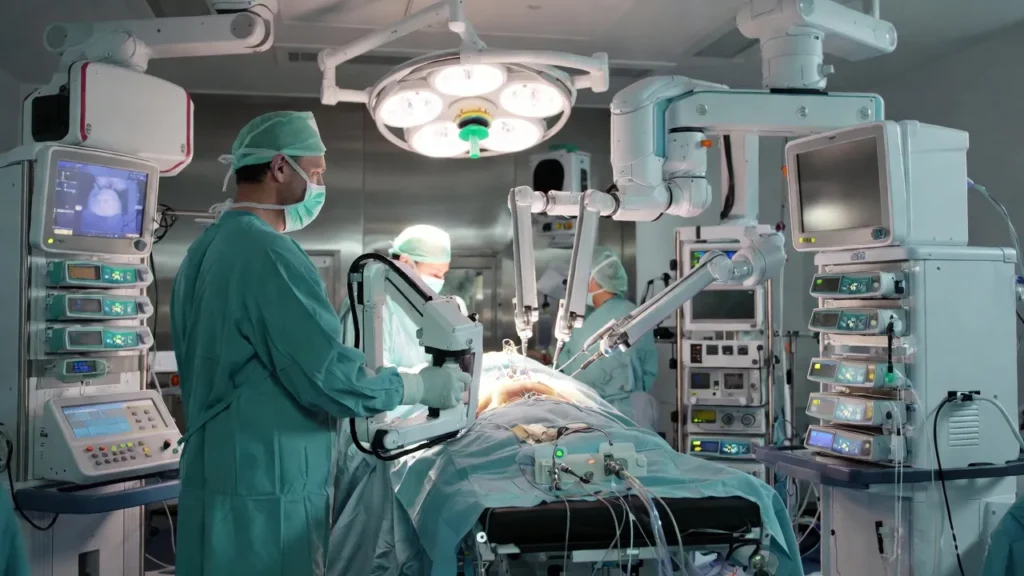
Robotic systems powered by AI assist surgeons in performing complex procedures with greater precision.
These systems allow surgeons to operate using minimally invasive techniques, which can reduce recovery time and improve patient outcomes. Many hospitals are adopting artificial intelligence in healthcare to enhance efficiency and reduce errors.
6. Virtual Health Assistants
AI-powered virtual assistants can help patients manage their health by providing reminders for medications, monitoring symptoms, and answering basic medical questions.
These systems help reduce the workload on healthcare professionals and improve patient engagement.
7. Hospital Management and Workflow Optimization
Hospitals use AI to improve operational efficiency. AI systems can help schedule staff, manage patient flow, and predict demand for medical services.
By optimizing hospital operations, healthcare providers can reduce waiting times and improve overall patient care.
Benefits of AI in Healthcare
Artificial intelligence offers several benefits to healthcare systems:
- Faster and more accurate diagnoses
- Improved patient outcomes
- Reduced healthcare costs
- Better data analysis and research
- More personalized treatments
These advantages are driving widespread adoption of AI technologies in medical environments. For a complete understanding, read our Artificial Intelligence complete beginner guide
Challenges and Ethical Concerns
Despite its benefits, AI in healthcare also raises important challenges.
- Patient data privacy and security
- Bias in AI algorithms
- Regulatory approval of AI systems
- Integration with existing healthcare systems
Addressing these issues is essential to ensure that AI technologies are used responsibly.
The Future of AI in Healthcare
The future of healthcare will likely include greater integration of artificial intelligence into medical practice. AI-powered tools may assist doctors in diagnosing diseases, monitoring patients remotely, and developing new treatments.
As AI technologies continue to evolve, they have the potential to make healthcare more efficient, accessible, and personalized.
Conclusion
Artificial intelligence is playing an increasingly important role in the healthcare industry. From medical imaging and disease prediction to robotic surgery and drug discovery, AI technologies are transforming how healthcare is delivered.
While challenges remain, the continued development of AI systems offers exciting possibilities for improving patient care and advancing medical research. As technology advances, artificial intelligence in healthcare will continue to transform modern medicine and improve patient outcomes.