
Introduction
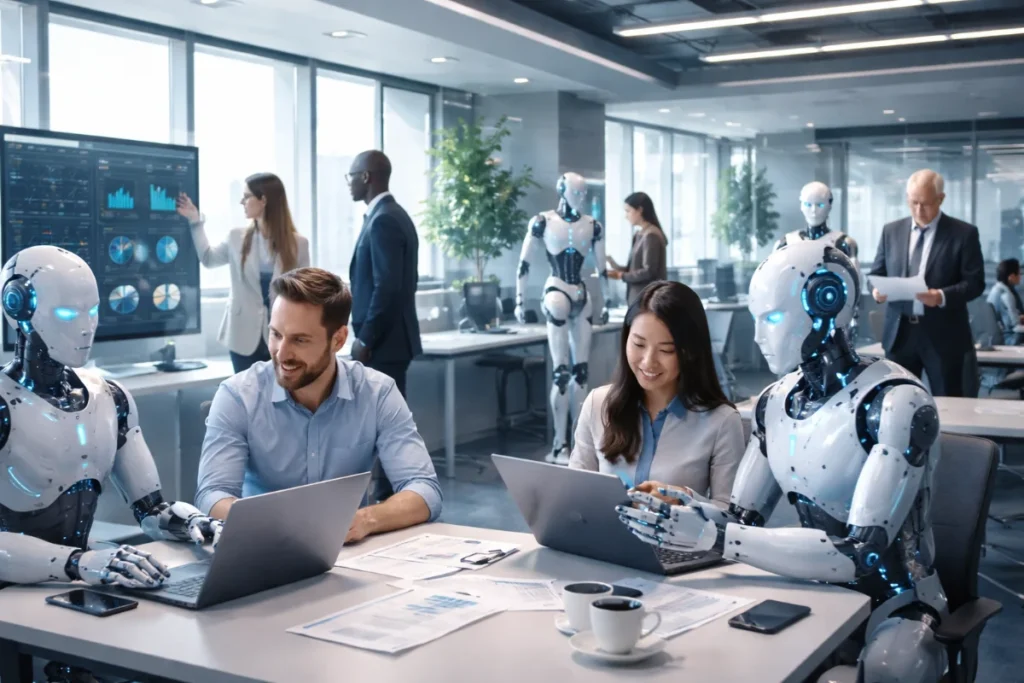
AI vs human jobs is one of the most discussed topics in today’s technology-driven world, as artificial intelligence continues to reshape industries and employment patterns. In this guide, we will explore how AI is impacting jobs, creating new opportunities, and transforming the future of work. To understand this topic better, it is important to learn what artificial intelligence is and how it works.
Table of Contents
How AI Is Being Used in the Workplace
Today, AI systems are already handling many workplace tasks:
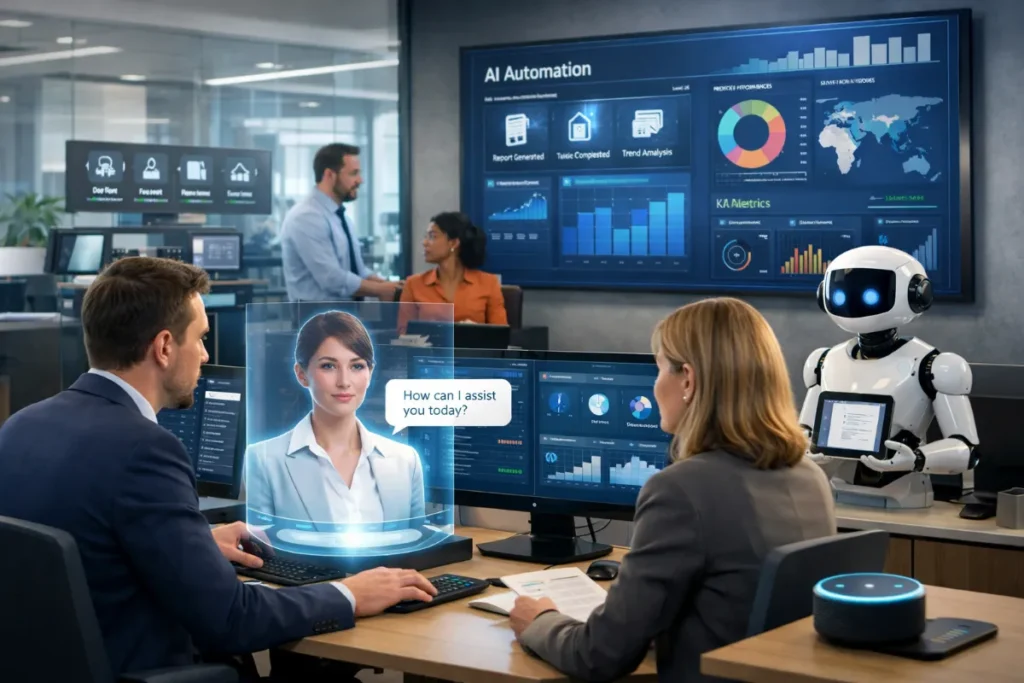
- Customer Support: Chatbots answering routine questions
- Data Analysis: Processing large datasets faster than humans
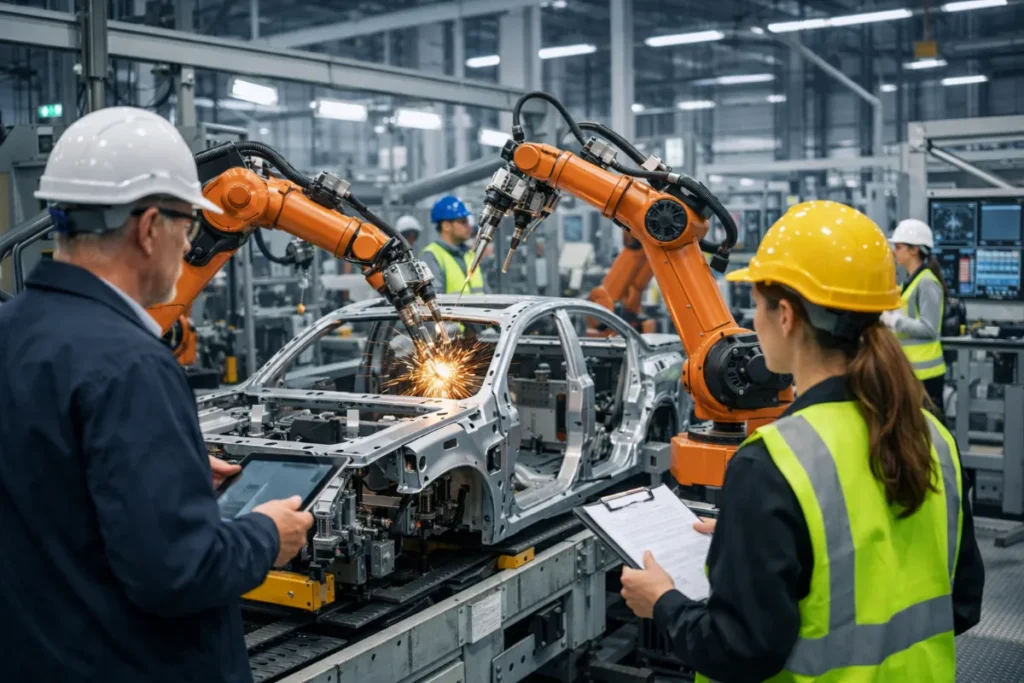
- Manufacturing: Robots assembling and inspecting products
- Finance: Detecting fraud and managing risk
- Healthcare: Assisting doctors with diagnosis and imaging
Companies like Google and IBM use AI extensively to improve efficiency and accuracy.
Jobs Most Affected by AI Automation
Some roles are more likely to be automated than others:
- Data entry and clerical work
- Customer service and call centers
- Basic manufacturing and assembly
- Warehouse and logistics operations
- Simple accounting tasks
These jobs often involve repetitive and predictable activities, making them easier for machines to perform.
Jobs That AI Is Unlikely to Replace
AI vs human jobs shows that not all work can be automated, as roles requiring creativity, emotional intelligence, and complex decision-making remain uniquely human:
- Teachers and educators
- Doctors and healthcare professionals
- Designers and artists
- Managers and leaders
- Counselors and social workers
Human judgment, empathy, and innovation are difficult for machines to replicate.
New Jobs Created by AI
While artificial intelligence replaces some tasks, it also creates new opportunities:
- AI engineers and data scientists
- Machine learning specialists
- Cybersecurity experts
- AI ethics and policy advisors
- Robotics technicians
As technology evolves, demand for digital and technical skills continues to grow.
How Workers Can Prepare for the AI Era
To stay relevant in an AI-driven world, workers can:
- Learn new digital and technical skills
- Improve problem-solving and creativity
- Focus on communication and leadership
- Adapt to lifelong learning
Education and reskilling programs play a key role in preparing the workforce.
The Future of Work
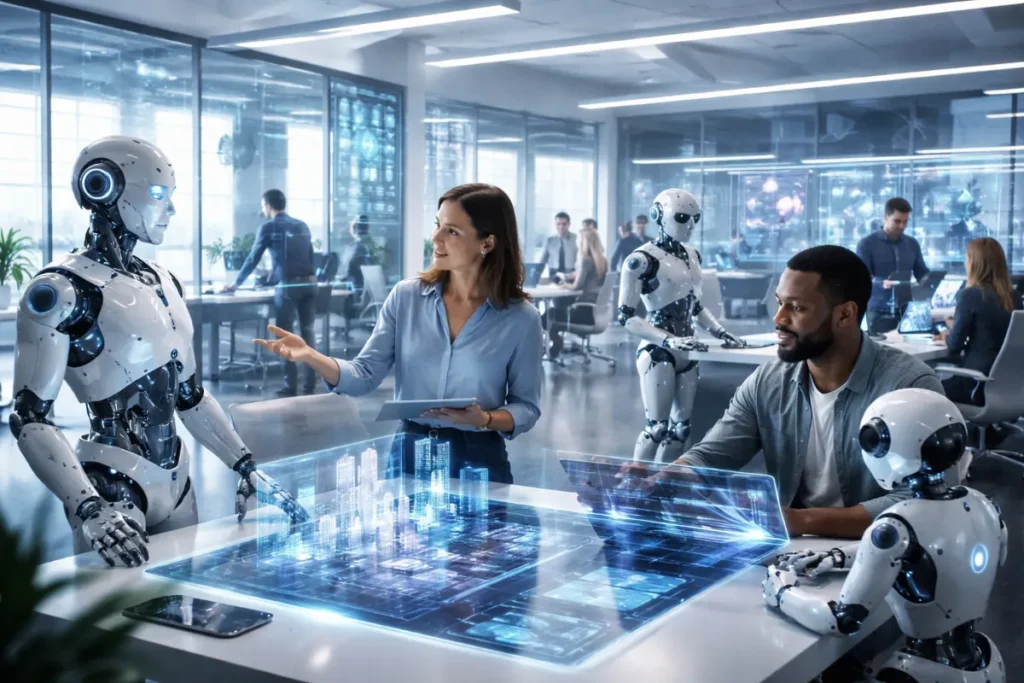
Many experts believe AI vs human jobs will redefine how industries operate and grow. Experts predict that AI will not eliminate all jobs but will significantly change how work is performed across industries. Instead of complete replacement, many roles will evolve, combining human creativity, critical thinking, and emotional intelligence with the efficiency and accuracy of intelligent machines. Routine and repetitive tasks are more likely to be automated, allowing humans to focus on more complex and strategic responsibilities. This shift will lead to a more collaborative environment where humans and AI systems work together to improve productivity and innovation.
As a result, the future workplace will be defined by collaboration between humans and AI rather than competition. Employees will need to adapt by developing new skills, especially in areas such as technology, data analysis, and problem-solving. Soft skills like communication, adaptability, and creativity will also become even more valuable, as they are difficult for machines to replicate.
Governments and organizations are increasingly investing in training programs, reskilling initiatives, and educational reforms to support this transition. Many companies are encouraging continuous learning to help workers stay relevant in an evolving job market. Online courses, certifications, and hands-on training programs are becoming essential tools for career growth in the age of AI. Understanding AI vs human jobs helps individuals prepare for changes in the future job market.
Governments and organizations are increasingly investing in training programs to support this transition.
Conclusion
Experts predict that AI will not eliminate all jobs but will significantly change how work is performed across industries. Instead of complete replacement, many roles will evolve, combining human creativity, critical thinking, and emotional intelligence with the efficiency and accuracy of intelligent machines. Routine and repetitive tasks are more likely to be automated, allowing humans to focus on more complex and strategic responsibilities. This shift will lead to a more collaborative environment where humans and AI systems work together to improve productivity and innovation.
As a result, the future workplace will be defined by collaboration between humans and AI rather than competition. Employees will need to adapt by developing new skills, especially in areas such as technology, data analysis, and problem-solving. Soft skills like communication, adaptability, and creativity will also become even more valuable, as they are difficult for machines to replicate.
Governments and organizations are increasingly investing in training programs, reskilling initiatives, and educational reforms to support this transition. Many companies are encouraging continuous learning to help workers stay relevant in an evolving job market. Online courses, certifications, and hands-on training programs are becoming essential tools for career growth in the age of AI. As technology evolves, AI vs human jobs will remain a key factor in shaping the future of work.