

Introduction
Blockchain technology is one of the most important innovations in the digital world today. It is best known for powering cryptocurrencies, but this technology has many other applications beyond digital currency.
Table of Contents
In simple terms, blockchain technology is a system for storing data securely and transparently across multiple computers. This makes it difficult to change or hack the data.
As industries look for more secure and efficient systems, this technology is becoming increasingly important.
What Is Blockchain Technology?
Blockchain technology is a decentralized digital ledger that records transactions across multiple computers.
Instead of storing data in a single location, decentralization distributes data across a network. This makes the system more secure and reliable.
Each block contains:
- Data (transactions)
- Timestamp
- Link to the previous block
These blocks form a chain, which is why it is called blockchain technology.
How Blockchain Technology Works
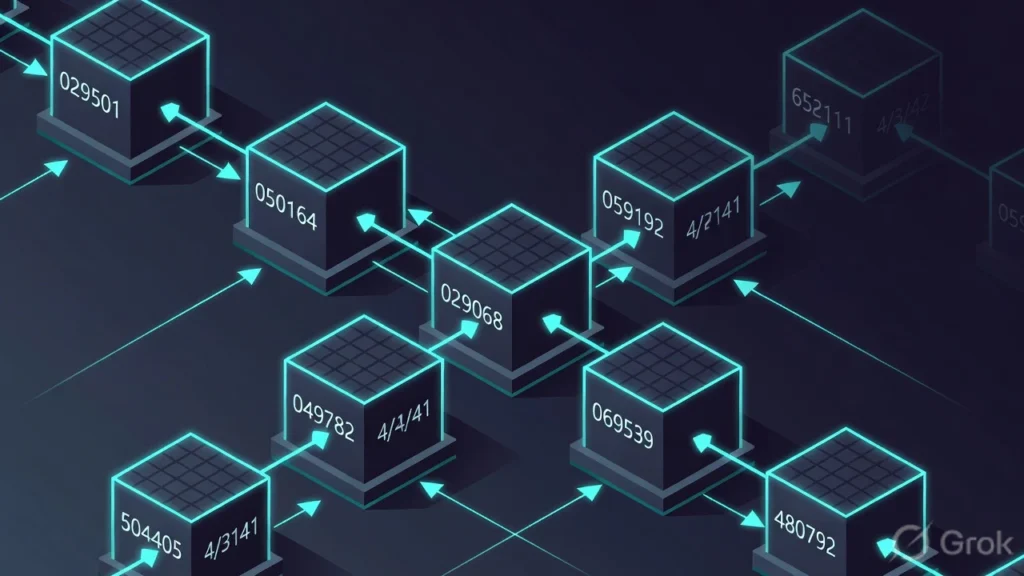
To understand the blockchain system, let’s look at the process step by step.
Transaction Creation
A transaction is created, such as sending money or recording data.
Verification
The transaction is verified by multiple computers (nodes) in the network.
Block Formation
Verified transactions are grouped into a block.
Chain Addition
The block is added to the chain, making the data permanent.
Once recorded, data in blockchain system cannot be easily changed.
Key Features of Blockchain Technology
Decentralization
Blockchain technology does not rely on a central authority.
Transparency
All transactions are visible to network participants.
Security
Data is protected using cryptographic techniques.
Immutability
Once recorded, data cannot be altered easily.
Applications of Blockchain Technology
This technology is used in many industries.
Cryptocurrency
Blockchain powers digital currencies like Bitcoin.
Supply Chain Management
Companies use a decentralized system to track products from origin to delivery.
Healthcare
Blockchain helps store patient records securely.
Finance
Banks use a blockchain system for secure transactions.
Benefits of Blockchain Technology

Improved Security
This innovative system reduces the risk of fraud and data tampering.
Transparency
All participants can view transaction history.
Efficiency
This system reduces the need for intermediaries.
Challenges of Blockchain Technology
Scalability
Scalability is one of the major challenges in this field. As the number of users and transactions increases, the network can become slower and less efficient. Processing large volumes of data requires significant computational power, which can lead to delays and higher transaction fees. Many blockchain platforms are actively working on solutions like layer-2 scaling and improved consensus mechanisms to handle growing demand more effectively.
To understand how large-scale systems manage data efficiently, you can also explore cloud computing and its scalability benefits.
Energy Consumption
Energy consumption is another concern, especially for this innovative system that uses proof-of-work mechanisms. These systems require powerful computers to solve complex mathematical problems, leading to high electricity usage. This has raised environmental concerns in recent years. However, newer blockchain technologies are shifting toward more energy-efficient methods, such as proof-of-stake, to reduce their environmental impact.
Regulation
Regulation remains a developing area in this system. Governments and regulatory bodies around the world are still working to create clear legal frameworks for blockchain and cryptocurrencies. This uncertainty can create challenges for businesses and investors. As regulations evolve, they are expected to bring more stability, security, and wider adoption of this technology.
Security and regulation are closely connected, and you can learn more about how data protection works in encryption and cybersecurity systems.
The Future of Blockchain Technology
The future of this decentralized system looks highly promising as more industries continue to adopt it for secure, transparent, and decentralized systems. Beyond finance, blockchain is expanding into areas like healthcare for secure patient records, digital identity verification to prevent fraud, and supply chain management for real-time tracking and authenticity.
In addition, innovations such as smart contracts and decentralized applications (dApps) are making blockchain more practical and scalable for everyday use. Governments and enterprises are also exploring blockchain to improve efficiency, reduce costs, and increase trust in digital systems.
Conclusion
This innovative system is transforming how data is stored and shared by providing a secure, transparent, and decentralized framework. Its applications are rapidly growing across multiple industries, making it one of the most important technologies of the digital era.
As technology continues to evolve, this system is expected to become a core part of digital innovation, reshaping how businesses operate and how individuals interact online in a more secure and trustworthy environment.