
Introduction
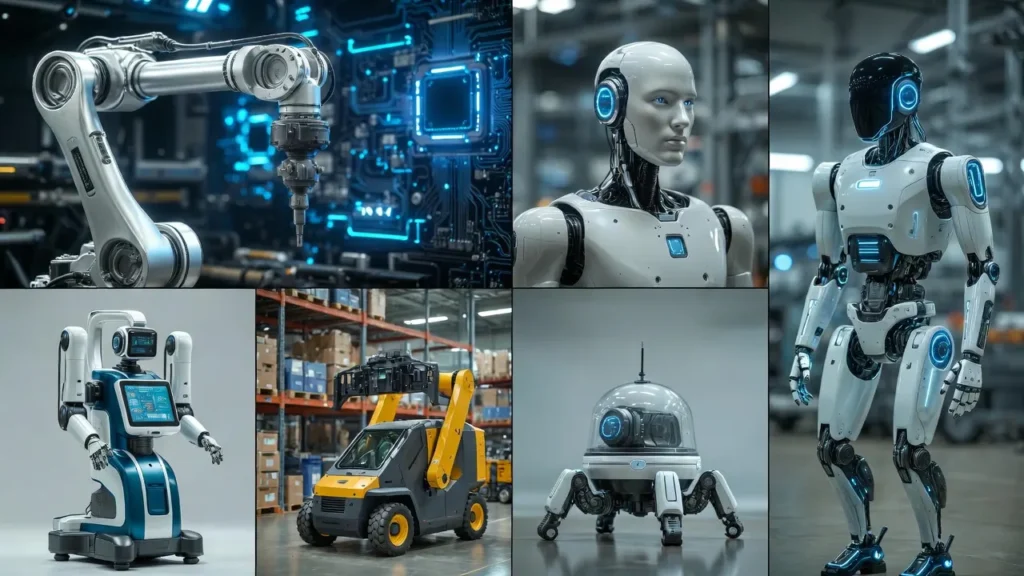
Types of robots play an important role in modern technology, helping industries automate tasks and improve efficiency. In this guide, we will explore different types of robots, their real-world uses, and how they are transforming everyday life.
Table of Contents
In this beginner-friendly guide, we’ll explore the main types of robots and their real-world applications across different industries.
What Is a Robot?
A robot is a programmable machine capable of performing tasks automatically or with minimal human intervention. Robots often combine mechanical components, sensors, software, and artificial intelligence to interact with their environment.
How Types of Robots Are Used in Real Life
Types of robots are widely used in industries such as manufacturing, healthcare, and automation to improve efficiency and accuracy.
1. Industrial Robots
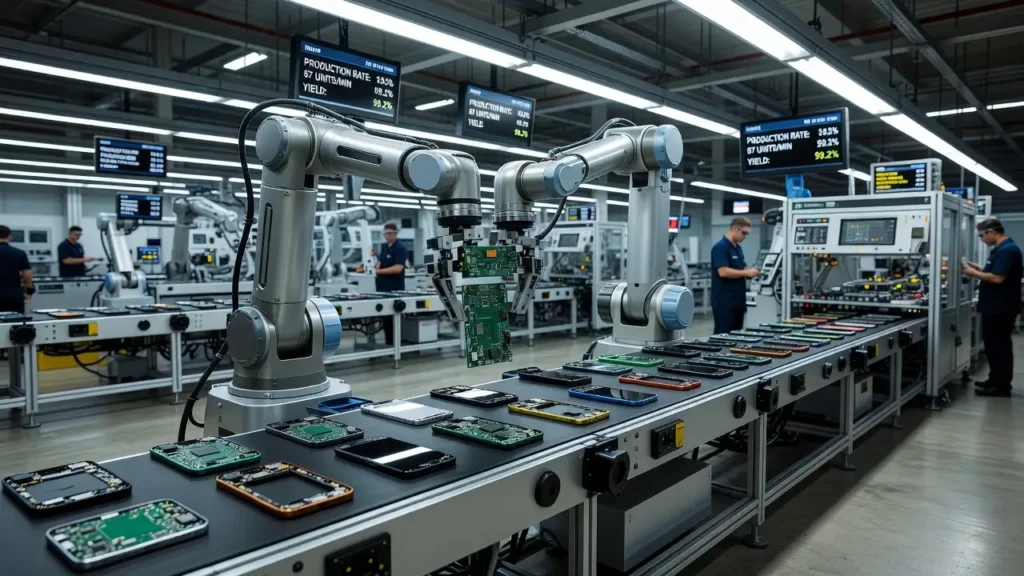
Industrial robots are widely used in manufacturing and production environments to perform repetitive and precise tasks.
Common Uses
- Assembly lines
- Welding and painting
- Packaging and quality control
Benefits
- Increased productivity
- High precision
- Improved worker safety
2. Service Robots
Service robots assist humans in daily tasks across homes, offices, and public spaces.
Examples
- Robot vacuum cleaners
- Delivery robots
- Customer service robots
These robots are designed to enhance convenience and efficiency.
3. Medical Robots
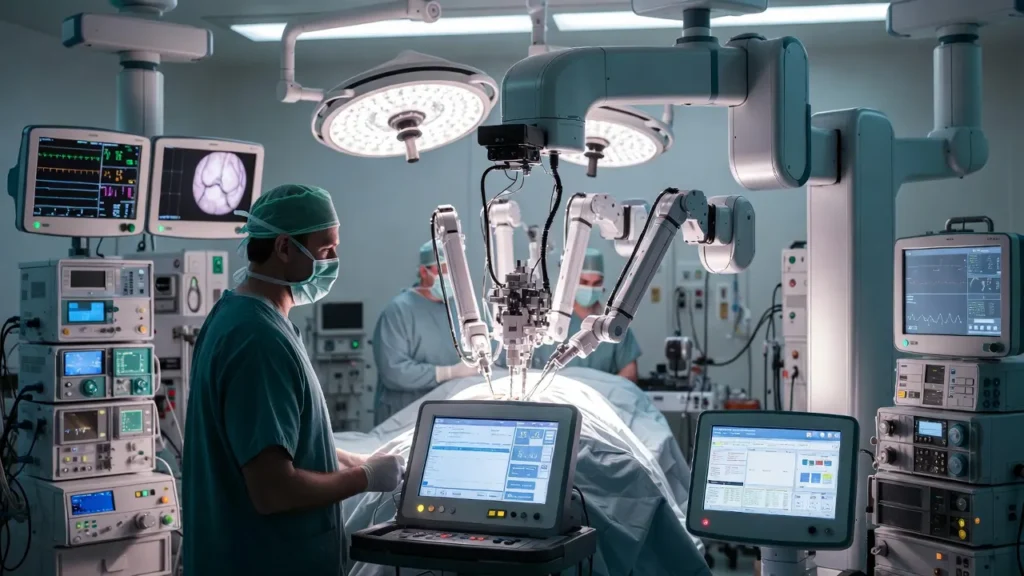
Medical robots are revolutionizing healthcare by assisting doctors and improving patient outcomes.
Applications
- Robotic surgery
- Rehabilitation robots
- Hospital delivery robots
Medical robotics enables minimally invasive procedures and better precision.
4. Autonomous Mobile Robots (AMRs)
AMRs can navigate environments independently using sensors and AI.
Uses
- Warehouse automation
- Delivery systems
- Security patrol robots
These robots are increasingly used in logistics and smart cities.
5. Humanoid Robots
Humanoid robots are designed to resemble humans in appearance and movement.
Examples
- Research robots
- Social interaction robots
- Educational robots
They are often used for research, education, and human-robot interaction studies.
6. Agricultural Robots
Agricultural robots help farmers improve efficiency and sustainability.
Applications
- Crop monitoring
- Autonomous tractors
- Fruit harvesting robots
These robots support precision farming and resource optimization.
7. Exploration Robots
Exploration robots operate in environments that are dangerous or inaccessible to humans.
Examples
- Space exploration rovers
- Underwater robots
- Disaster response robots
8. Collaborative Robots (Cobots)
Cobots are designed to work alongside humans safely in shared environments.
Uses
- Manufacturing support
- Assembly assistance
- Small business automation
Cobots improve productivity while maintaining flexibility.
Benefits of Robotics
✔ Increased Efficiency
Robots offer several important benefits in today’s world. One of the biggest advantages is increased efficiency, as robots can perform repetitive tasks faster and more accurately than humans. This helps businesses improve productivity and reduce operational costs.
✔ Improved Safety
Robots also enhance safety by handling dangerous tasks in industries such as manufacturing, mining, and healthcare. For example, robots can work in hazardous environments where human safety may be at risk.
✔ Precision and Accuracy
In addition, robots improve precision and accuracy. In fields like surgery and electronics manufacturing, robots can perform tasks with a high level of accuracy, reducing errors and improving outcomes.
✔ Cost Savings
Automation can lower long-term operational costs.
Robotics is also closely connected with artificial intelligence technologies that enable smarter and more adaptive systems.
⚠️ Challenges of Robotics
Despite their advantages, robotics presents challenges:
- High development costs
- Job displacement concerns
- Technical limitations
- Ethical considerations
Understanding these challenges helps guide responsible robotics adoption.
For a deeper understanding, you can explore how robotics works according to IBM.
The Future of Robotics
The future of robotics is expected to include:
- AI-powered collaborative robots
- Smart home robotics
- Healthcare automation
- Space and deep-sea exploration
- Human-robot collaboration
As AI continues to advance, robots will become smarter, more adaptable, and more integrated into daily life.
Conclusion
Robots are reshaping industries and everyday experiences by improving efficiency, safety, and innovation. From factories and hospitals to homes and outer space, robotics is becoming a key pillar of modern technology.
Understanding the different types of robots helps us appreciate their impact and prepares us for a future where humans and robots work side by side. As technology advances, types of robots will continue to evolve and play a major role in shaping the future.