
Introduction
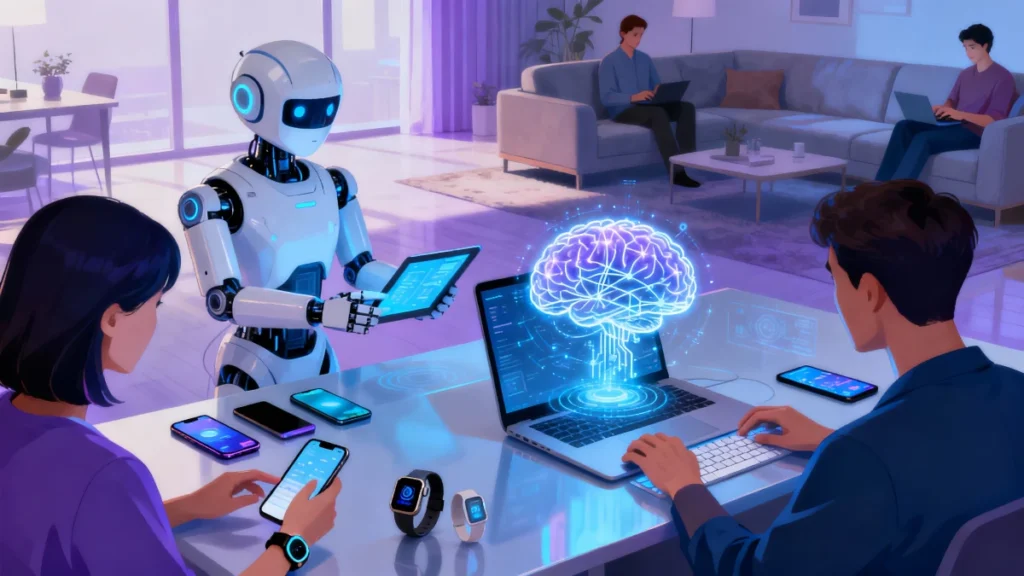
Artificial intelligence in everyday life is no longer limited to research labs or science fiction movies. Today, AI is actively shaping the way we live, work, and interact with technology on a daily basis. From the moment we wake up to the time we go to sleep, artificial intelligence is quietly working behind the scenes to make our lives easier and more efficient.
Table of Contents
AI powers many of the tools and services we use every day, including smartphones, voice assistants, recommendation systems, and smart home devices. It helps suggest movies and music, improves navigation through GPS, enhances online shopping experiences, and supports decision-making in businesses and healthcare.
From voice assistants like Siri and Google Assistant to smart cars and automated systems, artificial intelligence has become an essential part of modern life. As technology continues to evolve, AI is expected to play an even bigger role in transforming everyday experiences and improving convenience, productivity, and innovation.
What Is Artificial Intelligence?
Artificial Intelligence refers to machines designed to simulate human intelligence. These systems can learn from data, recognize patterns, make decisions, and improve over time using techniques like machine learning and deep learning.
Unlike traditional software, AI systems adapt and evolve instead of following fixed instructions.
For a deeper understanding, you can explore how artificial intelligence works according to IBM.
Common AI Applications You Use Every Day
You may already be using AI without realizing it:

- Smart Assistants: Voice assistants on phones and smart speakers
- Social Media: Content recommendations and feed ranking
- Online Shopping: Personalized product suggestions
- Navigation Apps: Real-time traffic prediction and route optimization
- Email Services: Spam filtering and smart replies
Companies such as Google, Apple, and Amazon rely heavily on AI to enhance user experience.
AI in Healthcare and Education
AI is making a meaningful impact in critical sectors:
- Healthcare: Early disease detection, medical imaging analysis, and drug discovery
- Education: Personalized learning platforms and automated assessments
These advancements help professionals work more efficiently while improving accuracy and outcomes.
Benefits of Artificial Intelligence
Key Benefits of AI in Everyday Life:
1. Faster Decision-Making
Artificial intelligence can process large amounts of data in seconds, helping individuals and businesses make quicker and more accurate decisions. This is especially useful in areas like finance, healthcare, and navigation systems.
2. Increased Productivity
AI automates repetitive and time-consuming tasks, allowing people to focus on more important and creative work. This improves efficiency and helps organizations achieve better results in less time.
3. Reduced Human Error
By relying on data and algorithms, AI minimizes mistakes that can occur due to human fatigue or oversight. This is particularly important in fields like medical diagnosis, data analysis, and manufacturing.
4. Better Personalization
AI analyzes user behavior and preferences to provide personalized recommendations, such as suggested products, movies, or content. This enhances user experience and makes services more relevant and engaging.
5. 24/7 Automation
Unlike humans, AI systems can operate continuously without breaks. This enables round-the-clock services like customer support chatbots, automated monitoring systems, and online assistance.
When used responsibly, AI becomes a powerful tool that complements human intelligence. For a complete understanding, read our Artificial Intelligence complete beginner guide
Challenges and Concerns
Despite its benefits, AI also raises concerns:
- Data privacy and security
- Job displacement through automation
- Ethical decision-making
- Bias in AI algorithms
Experts emphasize the need for transparent and ethical AI development.
The Future of AI

As AI continues to evolve, it is expected to become more integrated into daily life. From autonomous vehicles to smart cities, AI will shape the future of technology, work, and society.
Governments and tech leaders worldwide are investing in AI research to stay competitive in the digital era.
Conclusion
Artificial intelligence in everyday life is rapidly transforming how we live, work, and interact with technology. From simplifying daily tasks to enhancing decision-making and productivity, AI has become an essential part of modern society.
While challenges such as privacy concerns and ethical issues still exist, the potential benefits of artificial intelligence far outweigh the risks. As technology continues to evolve, AI will play an even greater role in shaping the future, making it one of the most powerful and influential innovations of our time.