
Introduction
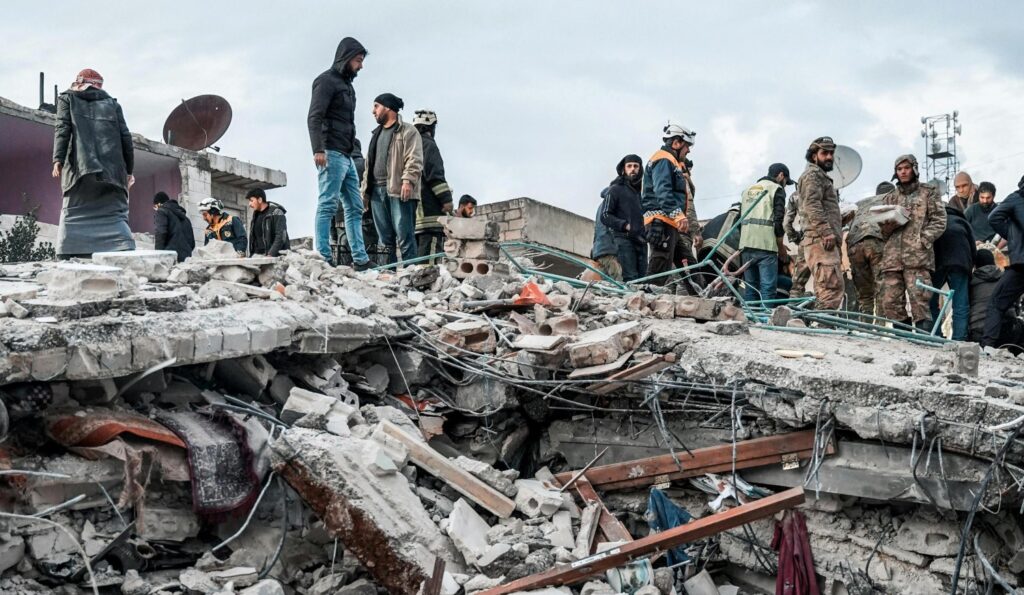
Robots in disaster zones are transforming how we respond to emergencies and life-threatening situations. From earthquakes and wildfires to nuclear accidents, rescue robots and autonomous drones are acting as heroes without capes. These advanced machines can navigate dangerous environments, locate survivors, and even assist in firefighting—without putting human lives at risk.
The growing use of robots in disaster zones shows how technology is making disaster response faster, safer, and more efficient. These robotic first responders can access areas that are too risky or impossible for humans, operate continuously without fatigue, and provide critical support during rescue missions.
What if first responders could go places people couldn’t, never get tired, and never fear danger? With the rise of robots in disaster zones, this is no longer science fiction but a powerful reality shaping the future of emergency response.
To understand this better, explore different types of robots and their real-world uses.
Table of Contents
1. The Role of Robots in Disaster Response
Extreme challenges are present in disaster areas, frequently making human assistance dangerous or impossible. Robots are turning out to be a really useful answer because
- Accuracy: Robots detect motion, heat signatures, and gas leaks with precision.
- Endurance: Robots can work continuously and don’t get tired like human rescues do.
- Safety: They go into dangerous regions that pose a serious risk to human responders.
Types of Rescue Robots
- Drones: Used for humanitarian delivery, mapping disaster areas, and aerial surveillance.
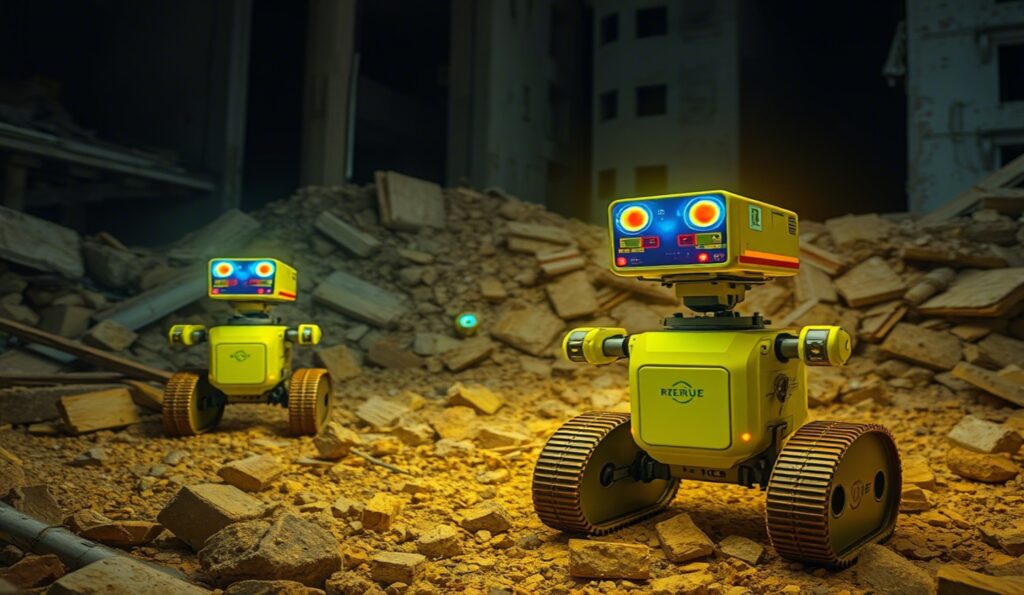
- Ground Robots: Tiny, nimble devices that can maneuver through debris and confined areas.
- Underwater Robots: Help with underwater inspections and flood rescues.
- AI-Driven Systems: Evaluate information, forecast the effects of disasters, and support decision-making
2. Robots in Earthquake Rescues
Time is of the essence in earthquake disasters. Robots with artificial intelligence (AI) assist in finding survivors buried behind debris, resulting in quicker and more effective rescues.
Case Study: Snake Robots in the 2017 Mexico Earthquake
Snake-shaped robots with cameras and sensors were used in Mexico in 2017 to look for survivors inside buildings that had collapsed. They were able to go through tight locations thanks to their adaptable design, which also gave rescuers access to real-time video and heat sensing.
Advantages of Earthquake Rescue Robots
- Real-time data transmission for quick decision-making.
- Thermal imaging to detect body heat under rubble.
- AI-driven mapping for better rescue coordination.
3. Fighting Wildfires with Autonomous Drones
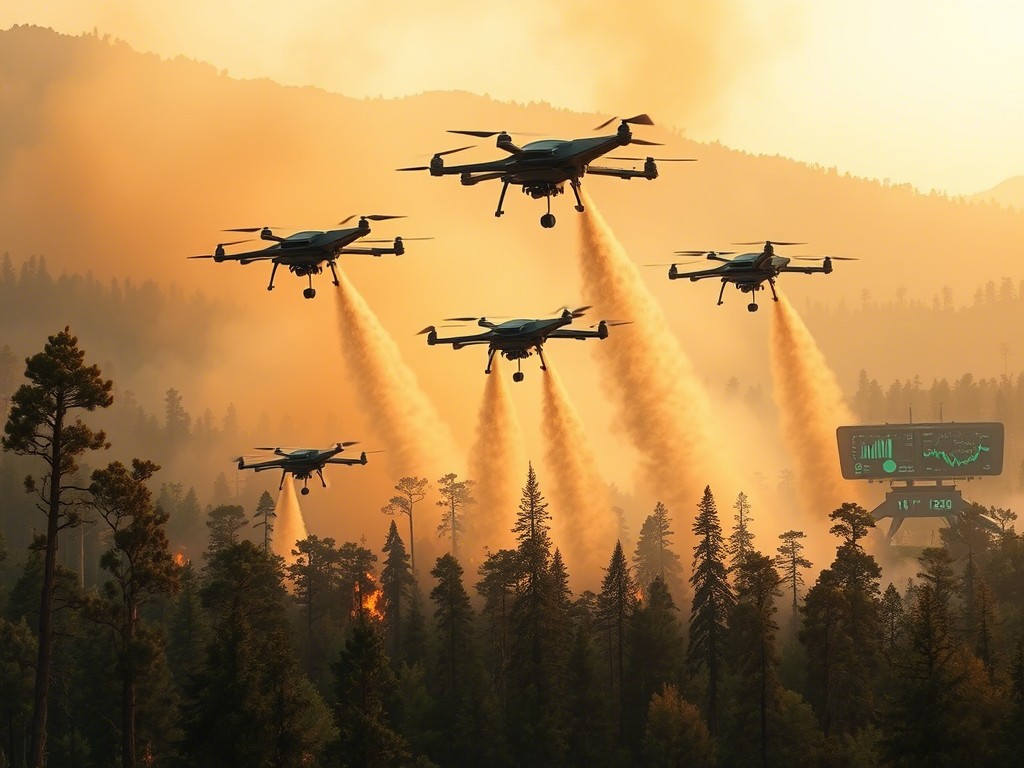
Firefighters find it hazardous to assess the situation since wildfires grow quickly. Fighting these dangerous fires is becoming increasingly dependent on autonomous drones and fire-resistant robots.
How Drones Help in Firefighting
- Mapping fire spread: Drones give firefighters a bird’s-eye perspective and help them with containment tactics.
- Dropping fire retardants: In difficult-to-reach places, certain drones transport and discharge flame retardants.
- Firefighter safety monitoring: Drones fitted with infrared sensors monitor temperatures and any threats.
Example: Colossus Fire-Resistant Robot
The Colossus robot, which was utilized in the Notre Dame Cathedral fire(2019), is capable of withstanding intense heat and transporting bulky firefighting apparatus. Since then, it has been incorporated into wildfire response plans all throughout the world.
4. Robots in Nuclear Disaster Zones
Because of the radiation exposure, nuclear disasters provide one of the most dangerous situations for human responders. Robots are essential for reducing these hazards.
Why Robots Are Essential in Nuclear Disasters
- Detect and measure radiation levels without endangering human lives.
- Inspect and repair damaged infrastructure in high-radiation areas.
- Collect radioactive debris to prevent further contamination.
Case Studies: Chernobyl(Ukraine) and Fukushima(Japan)
- Chernobyl: Radiation hotspots have been mapped in recent years using robotic vehicles.
- Fukushima: Robots like Boston Dynamics’ Spot were used to evaluate reactor damage and gather samples following the 2011 nuclear accident.
5. The Future of AI in Disaster Relief
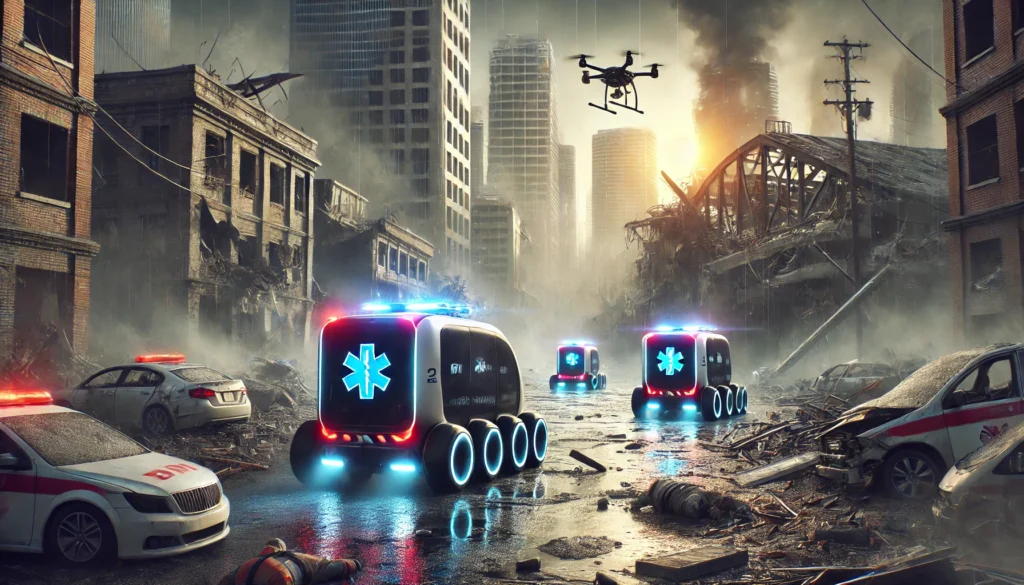
AI’s involvement in disaster response is still developing, providing increasingly sophisticated life-saving solutions.
Emerging Technologies in Rescue Robotics
Innovations in robots in disaster zones are rapidly improving emergency response capabilities. New technologies are making rescue missions faster, safer, and more efficient in critical situations:
- Swarm drones: Groups of drones working together to conduct coordinated search and rescue operations in disaster zones
- Predictive analytics driven by AI: Helping emergency teams anticipate risks and improve response strategies in robots in disaster zones
- Autonomous rescue vehicles: Designed to transport injured people safely without requiring human drivers in hazardous environments
For more insights, explore how robotics is used in real-world missions by NASA.
The Role of Governments and NGOs
The development of robots in disaster zones is being actively supported by governments and nonprofit organizations. These institutions are investing in AI-powered disaster response systems to improve efficiency and reduce casualties.
By integrating robots in disaster zones into emergency planning, authorities aim to respond faster, make better decisions, and protect more lives during natural and man-made disasters.
Conclusion
Robots in disaster zones are transforming disaster response and proving that technology can truly save lives. From autonomous drones fighting wildfires to rescue robots navigating dangerous terrain, these innovations are reducing risks and improving survival rates in critical situations.
As technology continues to evolve, the role of robots in disaster zones will become even more important in handling emergencies. These robotic heroes are not just supporting human responders—they are reshaping the future of disaster management.
Could robots in disaster zones become the backbone of future disaster response systems? The answer may shape how we protect lives in the years to come.